
Getting Sticky with Dr. Lucky Sekhon
Brilliant, compassionate, and deeply real, Dr. Lucky Sekhon is the big sister you wish you had—except she’s also a board-certified OB-GYN and fertility specialist who has made getting women pregnant her life’s work.
The first thing that must be said is Dr. Lucky, as she’s known, is a woman who loves women. With two sisters, her maternal grandmother, and formidable mother, she grew up in a house governed by women. The double-XX chromosome energy suited her—and the conversations around the house about the female body inspired her to make women’s health her career focus.
The second thing to say about her is when it comes to expertise and experience around fertility, Dr. Lucky is unmatched—and she made a crucial decision during Covid that she wanted to share what she knew with not just her patients and colleagues but the whole world. She began posting on Instagram and what started as a small following blossomed into educating her nearly 125K followers, regular TV appearances, and her recent book: The Lucky Egg: Understanding Your Fertility and How to Get Pregnant NOW.
Below she talks about the information gap in fertility, her own journey to conceive, and why she never wants to emotionally detach from her job.
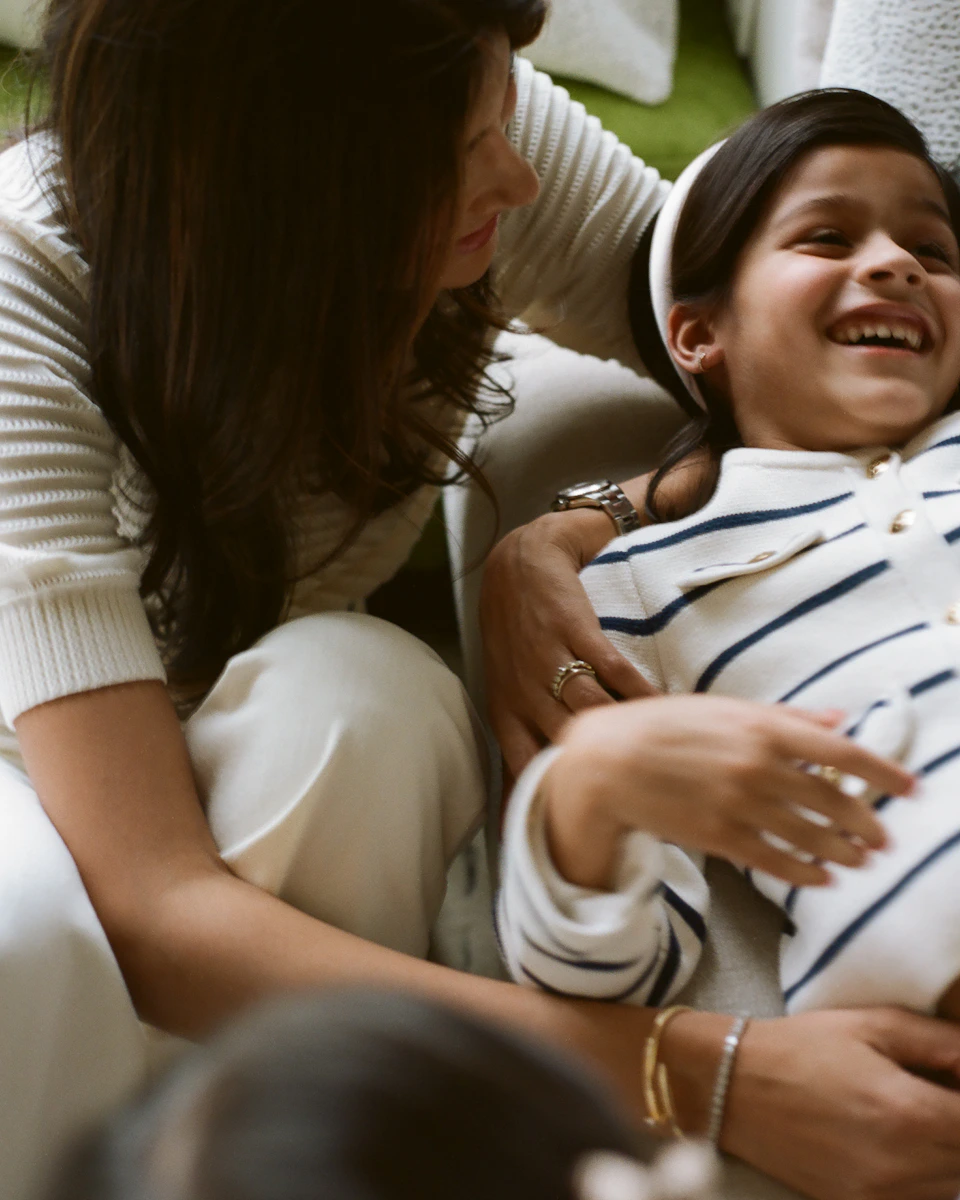
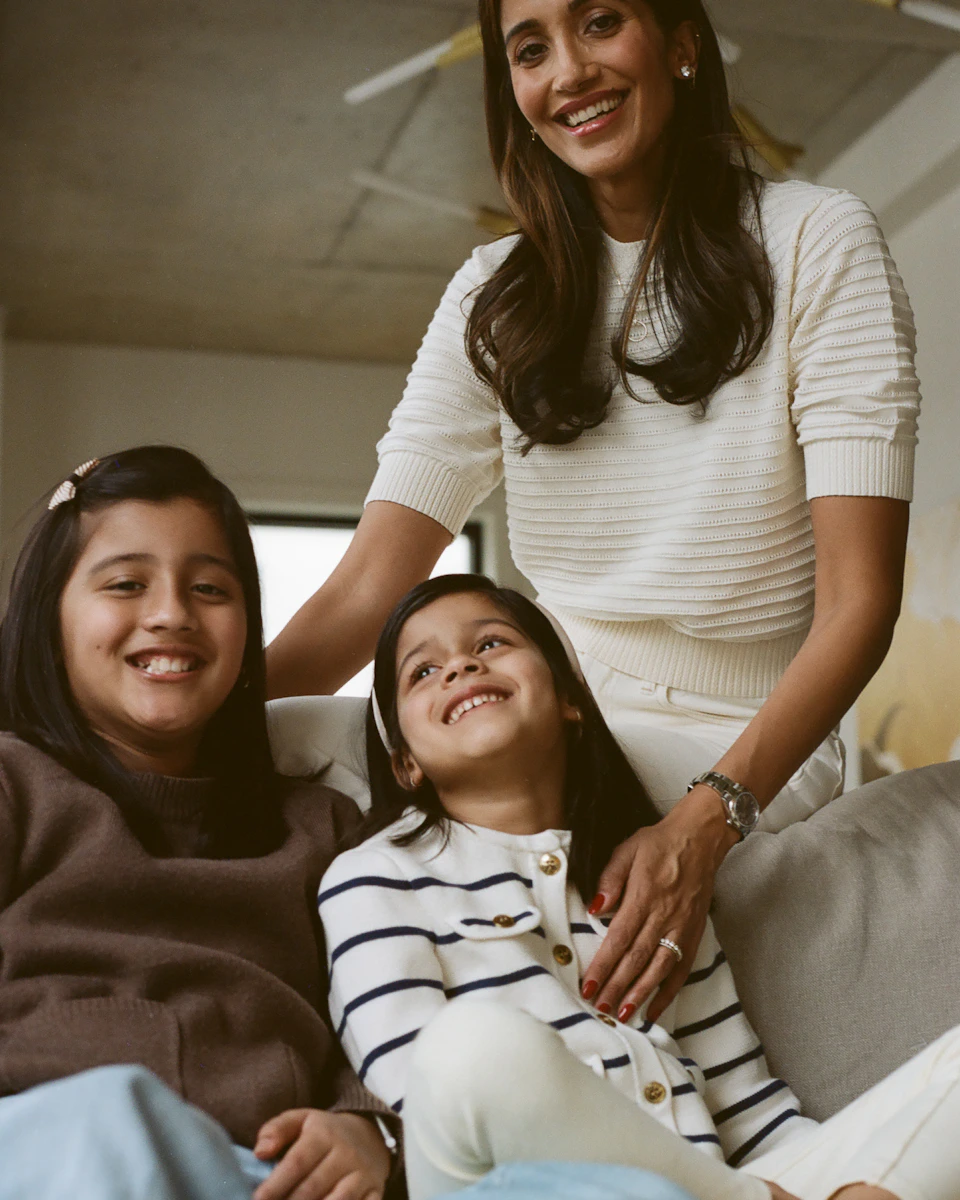
Words by Emily Barasch; Images by Saavan Sagar.
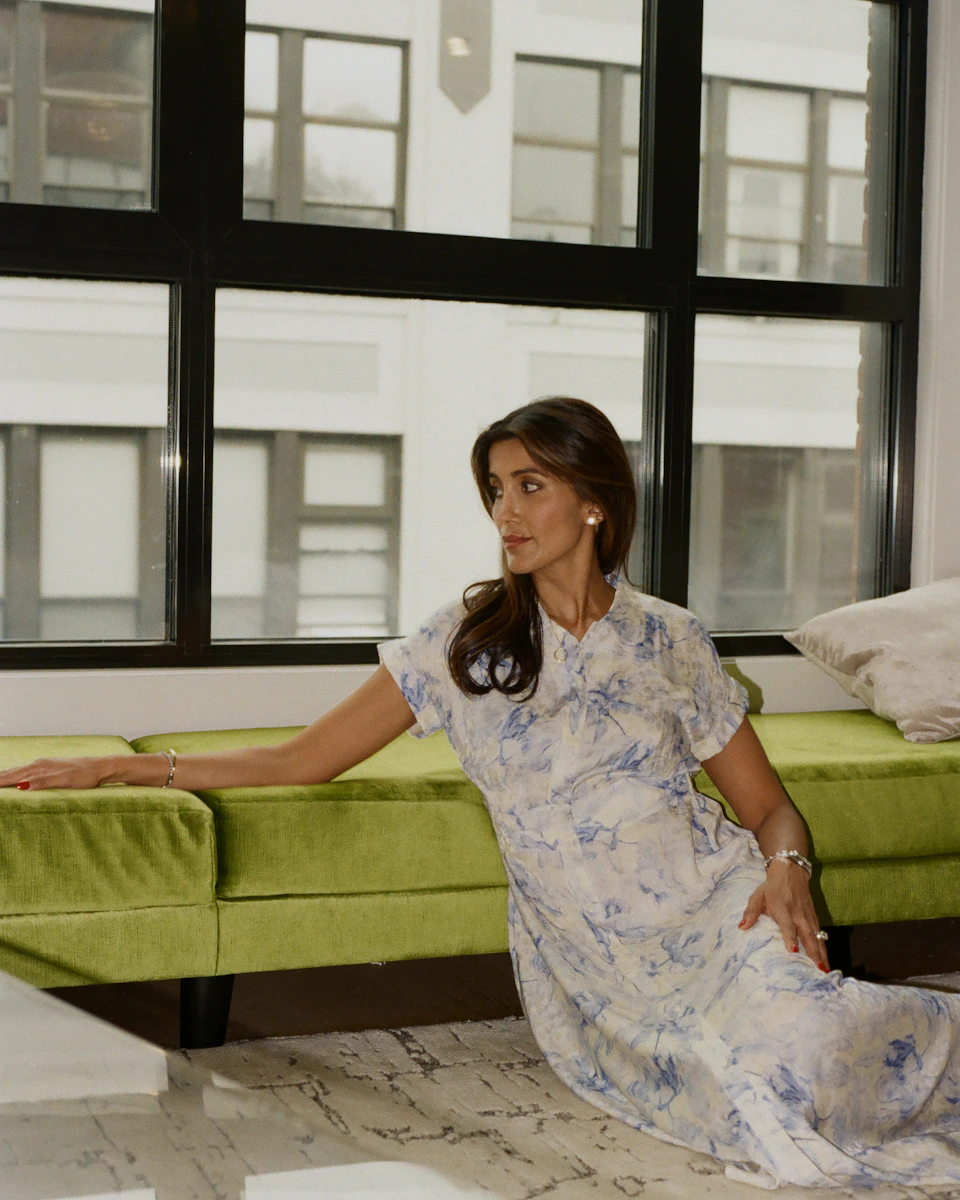
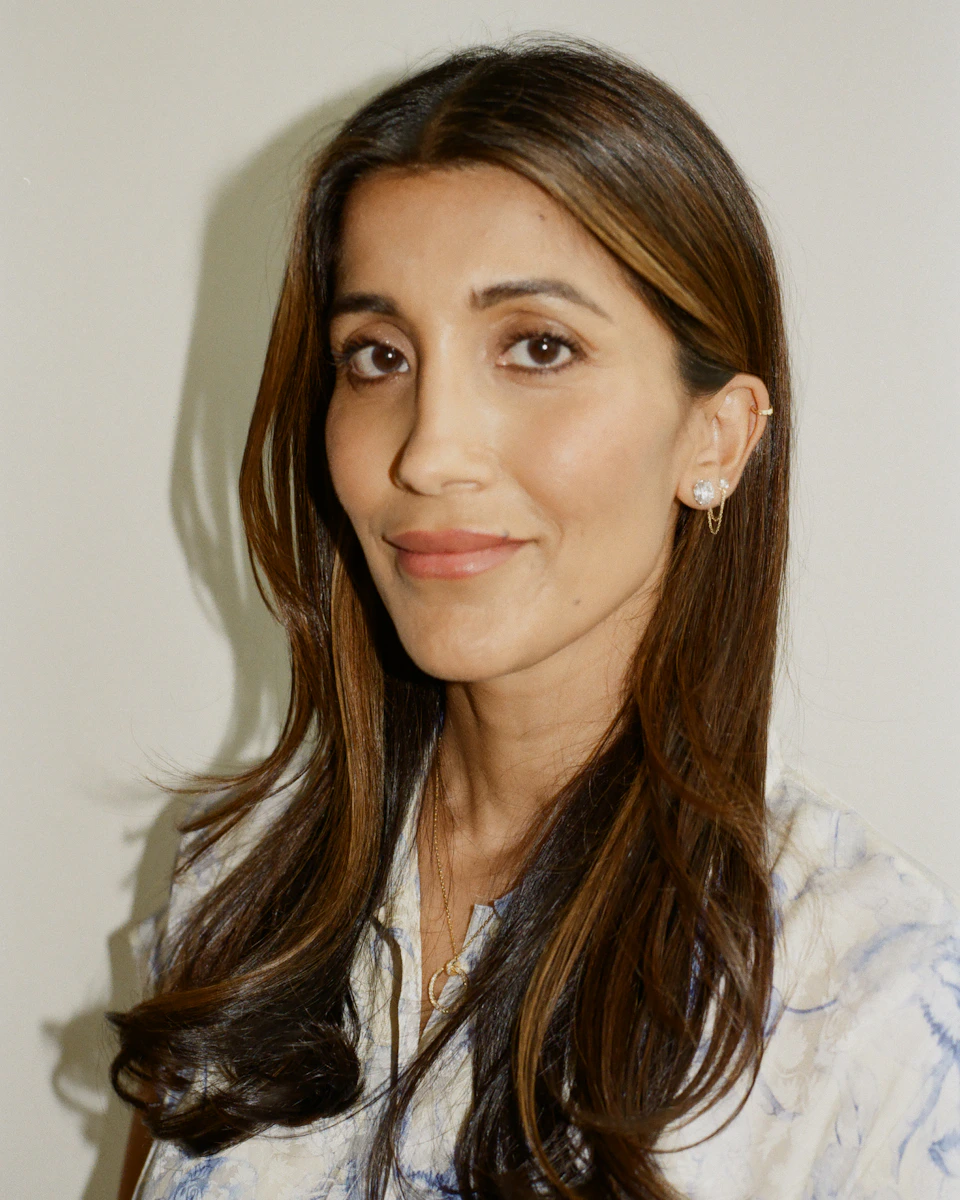
Why Dr. Lucky choose to specialize in fertility
I come from an extremely matriarchal household. My maternal grandmother was the head of the household, and my mom has a very strong personality. I have two sisters who are older than me. Women’s health topics dominated the conversation a lot of the time.
Due to my experience growing up, I just felt most comfortable helping and talking to women. I love that women can have these open, vulnerable conversations.
It was inspiring to me to the point where there just was no other option. I thought: If I’m going into medicine—because there was a question of whether I wanted to do other things; I really like writing and have a creative side—I want to really concentrate on women’s health.
I became interested in fertility from an early stage. I did an internship at the Cleveland Clinic and worked with urologists and people focusing on sperm quality. Then I learned about IVF, egg freezing, and conditions like endometriosis, and I thought: This is so interesting. I want to be a part of solving these problems.
I also wanted to be in a fast-moving field. Every field has had advances—cardiology and all the different specialties—but it was cool to think that IVF didn’t exist before the seventies, and now it’s moving at breakneck speed.
The staggering progress of IVF
My predecessors, who are just now retiring, remember practicing in an era when they were offering single-digit success rates to patients who were putting their all into processes in order to build their families. They had to say, “Listen, there’s a five to 10 percent chance this could work.”
Now, we practice in an era in which the best-case scenario is a 70 percent chance at getting pregnant from a particular treatment.
I think that’s a miraculous turnaround. Even in the relatively short time I’ve been in this field, I’ve seen massive changes in the way things are done. The science is moving rapidly, and to me, that is exciting. I wanted to be a part of that.

“Sometimes you can make a plan, and that plan doesn’t work out.”
I put out motherhood of my mind during my twenties. I even remember telling my friends and people around me, “My life plan is even if I get married or settle down, I will not be having kids until I’m in my forties.” I was training, and I knew there was a lot to do for my career.
I met my husband in my late twenties, and we dated through our early thirties. I had kind of primed him for that. I told him: “Yeah, I’m not trying to have kids anytime soon.” He understood; we were very aligned.
It was only when I got into the field of fertility—I was in medical school, then I became an OB-GYN, delivering babies and doing surgeries, and then I subspecialized and spent three concentrated years focusing on fertility—that I started seeing all these women coming in and out.
It became clear to me that science is great, and there’s a lot it can achieve, but we’re not in a place where we can really overcome everything there is to overcome with our biological clock. Sometimes you can make a plan, and that plan doesn’t work out. The lack of control became very much at the forefront of my consciousness.
It led me to think more critically in a way that I wouldn’t have if I were still in medicine but in a different field. I had this thought: Okay, I want to freeze embryos. But I did some baseline testing, and I had some labs that didn’t look great. I had a lower egg count.
So I pivoted at that moment and said to my husband, “Listen, we just got married. I know this wasn’t the plan I discussed. We’re in our early to mid-thirties. I kind of feel like I should get off birth control, and we should just see what happens and try.”
Luckily, that ended up being pretty straightforward. I got pregnant and had my daughter, who’s now nine.
The exquisite combination of knowledge plus preparation
After I delivered her, I decided that once I was done breastfeeding, I was going to freeze embryos because I was concerned. I ended up rushing to freeze embryos because I thought, Let me just get this done, because I’m anxious that my egg count is probably even lower.
It was a little bit of a hard experience because I had access to fewer eggs. It took multiple rounds to get what I needed. I had a failed cycle. I had a cycle where I only got two eggs. That didn’t mean I had infertility.
But for me, that was a lightbulb moment. After all the years of giving advice to patients and saying, “If you have a low egg count or a low number of eggs retrieved for egg freezing or embryo freezing, that doesn’t mean you’re infertile,” I still felt like it did when I was the patient.
That was a very eye-opening experience—to realize, I can’t intellectualize this. I just feel bad. It feels like my body’s broken. It was a hard thing mentally to go through, even though nothing was actually wrong.
Cut to two years later. I was finally in a place where, physically and mentally, I felt like I could try again. At that point, I really wanted a second child. But it was really hard. I couldn’t get pregnant. But because I knew all about the biological clock, I had planned for it. So I ended up using the embryos that I froze, and I was able to have baby number two—Gemma, she’s five.
I had the preparation for it and all the knowledge because of my profession, and that led me on a journey of feeling really passionate about making sure everyone has the information they need to make the right decision for them. I don’t think there’s one right decision. But I think you can’t make the right decision—whatever it is—unless you have the correct information and all of the context.
That rang true for my story. I know it influenced the decisions I made and paved an easier path forward for me. I feel grateful about that every day. That’s what I’m trying to do now—online and in my clinic when I see patients. I’m trying to educate women and bring them up to speed because I think there’s a huge fertility knowledge gap.

The fertility knowledge gap, explained:
We are the first generation in the history of the world to have to grapple with our biological clock being static where it is. Our egg quality starts to change at the age that it does, and that's just what it is. But we've had this major evolution socially in what women can do.
We're on equal footing with men, if not advancing past them in some ways. If you look at medical school classes now, it's often a 50-50 composition of male versus female, or even more female than male. The same is true in education and higher education.
So we are in a unique situation with unique challenges that our moms and our grandmothers didn't have. They had other challenges—which I do not want to have—but the freedoms and advancements from a social standpoint have created other pain points and challenges, and no one equipped us adequately for that.
For most of the women I speak to on a day-to-day basis in my clinic, the last time they thought about their fertility was in high school or grade school health class. The goals were very different. And we're all just magically expected to do this 180 where, one day, we wake up and realize we have a biological clock. We now must understand what it means to ovulate, how to time that, and how to make all of our efforts count.
We're often blindsided when a miscarriage happens because no one mentally prepared us and said, “Hey, this is a major thing that happens with our biology.” It becomes more prevalent as we age, and no one is immune.
Therefore, a lot of us have internalized miscarriages as something we did wrong. We were too stressed. We didn't give enough time or dedicate enough energy to the pregnancy. When, in reality, the vast majority of first-trimester miscarriages are something you couldn't have modified. It's the genetic composition of the embryo that happened to form.
There’s this massive gap. There's this extreme view of either gloom and doom or an overly rosy picture, which is what I thought. I thought, Science can overcome everything. I don't have to think about this until I'm 40, and it'll be totally fine.
I just think women need to be told how their bodies work. It needs to be explained to them. They need to understand so they can make decisions that make sense for what they want and what's happening with their biology.
There's a reason why it takes an average of seven to 10 years to be diagnosed with a major gynecologic issue like endometriosis, which can be a major cause of infertility, or PCOS. There's been a major gap.
The healthcare system hasn't helped because there's been a chronic lack of funding toward including women in clinical trials, which only started changing in the nineties. If we're not including women in major clinical trials, that shows we're not prioritizing women's health issues.

"Having gone through fertility treatment myself—including failed cycles—I understand the lack of control, the disappointment, and the negative self-talk that can creep in when things don't go as planned. Experiencing that firsthand has made me a more empathetic physician."
Dr. Lucky’s prescription for balance
I love being a mom. It's funny because I remember a time in my life when I thought, It'll happen later—later, later. Now I think, Oh my God, this makes me so happy. Motherhood gives me something deeply real to focus on. It feels natural and grounding.
As busy as I am, I put my girls to bed almost every night. Being present with my kids is something I'm not willing to compromise on. What tends to suffer instead are my friendships and social life. There are only so many hours in the day, and my work—both in the clinic and outside of it—is incredibly demanding.
I prioritize taking time off, putting my phone away in the evenings, and being fully present with my family. Even if I have deadlines, I'll often sacrifice sleep before I sacrifice that time with my kids. Self-care, friendships, and socializing are probably the areas I need to work on. But right now, I'm in a season of life with a nine-year-old, a five-year-old, a demanding career, and a mission that I'm deeply committed to. When you're on a mission, you sometimes have to prune your life so you can stay laser focused. At the same time, I never want to feel like I'm missing my children's lives. That's the constant balancing act, and I'm always learning.
My husband does a wonderful job of creating balance. He's an entrepreneur who works from home, which makes things a bit easier when I'm in the clinic or attending events. We also have an incredible nanny who's been with our family for all nine years, and our parents visit often. We don't have a huge village nearby, so dependable childcare has really been the backbone of our family. It's what allows both of us to pursue our careers while knowing our girls are well cared for.
Motherhood has also changed the way I practice medicine. I was already a fertility specialist before I became a mom, and I thought I understood how invested I was in my patients. But once you've experienced what they're fighting so hard for, it takes on an entirely different meaning.
Having gone through fertility treatment myself—including failed cycles—I understand the lack of control, the disappointment, and the negative self-talk that can creep in when things don't go as planned. Experiencing that firsthand has made me a more empathetic physician and has given me better tools to help my patients through those moments.
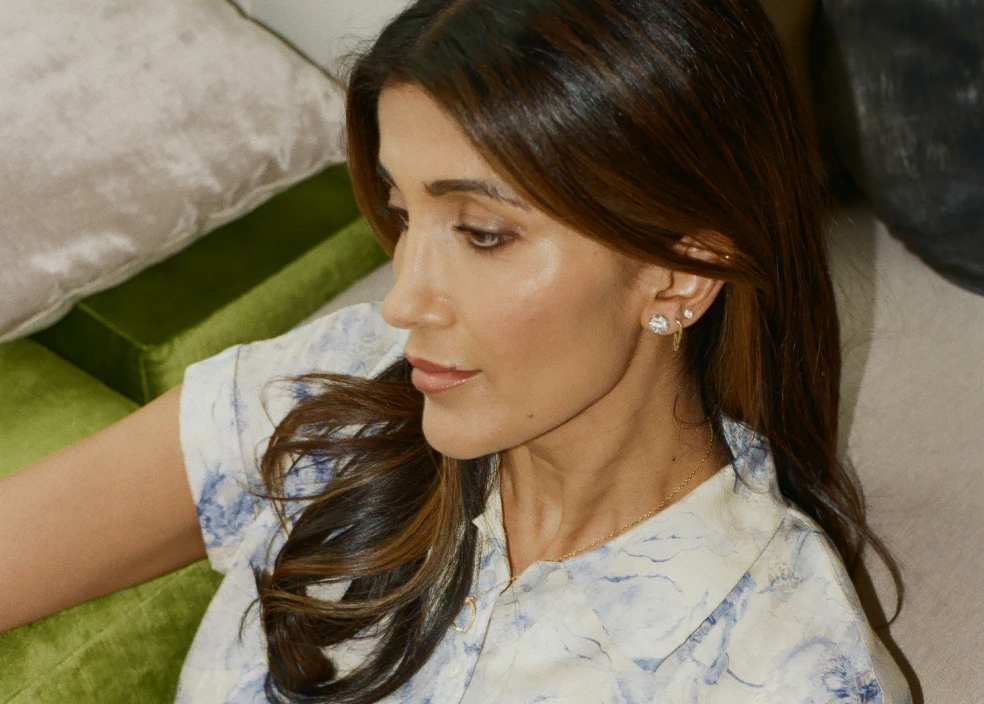
"I don't think it's possible to do this work well if you become emotionally detached. Fertility is such a vulnerable part of people's lives that compassion is essential."
The bittersweet reality of working in fertility
Fertility medicine can feel like emotional whiplash. During our morning monitoring appointments, patients come in before work for scans and lab work. In one room, I might be congratulating someone who's graduating to their OB/GYN because everything looks great. In the next room, I may discover a miscarriage. Then I may have to tell someone we're canceling their cycle because they aren't responding, while another patient is having excellent results.
These aren't brief encounters. You build relationships with people. They share their deepest fears, their hopes, their dreams, and the challenges they're facing. You become deeply invested in them, and it's not easy to leave that behind at the end of the day.
I'm not very good at separating work from home. After I put my kids to bed, I'm often back on my email communicating with patients. I haven't figured that balance out yet, and I'm not even sure I want to separate the two. I don't think it's possible to do this work well if you become emotionally detached. Fertility is such a vulnerable part of people's lives that compassion is essential.
Another unique aspect of this field is that you're often caring for a couple or an entire family, not just one patient. People process grief, disappointment, and hope differently, so emotional intelligence and communication skills are incredibly important. The challenge is that highly empathetic people also tend to absorb a lot of the emotional energy around them.
There are times when I need to retreat. That's probably another reason I don't socialize as much as I used to. Sometimes I'm emotionally exhausted, and what I need most is a quiet Friday night in pajamas with my family, just decompressing.
Everyone must figure out what fills their cup. For me, spending time with my family is the antidote to burnout. It reminds me why I do this work. Every emotional high and low is in service of helping someone experience what I have—to build the family they've dreamed about or preserve the opportunity to do so in the future. Remembering that mission is what keeps me going.