My parents fell in love. I inherited the politics.
Words By Merie Subryan
It was 2000, the first year of a new millennium, and there I was nine years old, sitting in my auntie’s backyard, waiting for the pandit to arrive. Around me were marigold garlands, silk saris, made-to-measure sherwanis, and clinking 24-karat gold jewelry. To my nine-year-old eyes, it felt like a scene from Dilwale Dulhania Le Jayenge, only it seemed days longer. I wore cornrows and a fluorescent sari, my bindi landing slightly off-center as I squirmed away from my mother’s hands. The fussing and adjusting felt like a private humiliation ritual, one no one else seemed to notice as everyone hurried around getting the wedding underway. Among my cousins, I felt conspicuous.
As a child, my reference points were limited, but I was already becoming familiar with that wildfire anxiety, the kind that began as a prickling itch under my skin and spread until I wanted to peel myself out of the sari my mother had just wrangled me into. Then came the usual looks, eyes gone wide, followed by half-smirks that threatened to become laughter. We were family, after all. I belonged there, but I was beginning to understand that belonging could be a fact and still fail to register on sight.
Both of my parents are Guyanese, from a small South American country many Americans knew as the site of Jim Jones’s promised utopia, where poisoned fruit drink was eventually reduced to an American idiom—“drink the Kool-Aid”. Guyana had other cameos in the American imagination, though they were easier to miss. Sidney Poitier’s character in To Sir, with Love was from British Guiana, a detail that rarely seemed to travel with the film. Growing up, I would say Guyana and someone would answer, “Oh, Ghana.” My all-time favorite, though, was the retrieval cue my parents’ accents seemed to provide: Jamaican.
I’m Dougla, a Caribbean term for people of both African and Indian ancestry. My mother is Indian. My father is Black. In Guyana, that particular mix already had a name. In America, the instruction I encountered was simpler: Fill ONE circle.



"My mother is Indian. My father is Black. In Guyana, that particular mix already had a name. I’m Dougla, a Caribbean term for people of both African and Indian ancestry. In America, the instruction I encountered was simpler: Fill ONE circle."
On school forms and standardized tests, when asked to mark my race, I filled in Black with my sharpened Lisa Frank pencil, uneasy as I shaded the circle. I felt a small sense of loss, as though making myself legible on paper required leaving another part of myself unmarked.The cognitive dissonance came from knowing I was Black while also knowing that Black was not the entirety of me. If I was Black in America, where did my mother go? I understood why I was Black. What I couldn’t understand was why being Black seemed to require everything else to recede.
At school, among my friends, I rarely volunteered that I was half Indian. When they saw me talking to my mother on report-card day or after a school recital, I could almost count on the same question, “Merie! That’s your mom?” Eventually, I grew tired of having to explain my mother. By then, their bewilderment had become one of the conditions under which I understood myself, and my hair was the first place where I began to feel the consequences.
My mother’s hair was long, straight, and uncontroversial, the kind of mane I had already learned to covet. Mine might as well have come with a hazard label. On wash days, she shampooed mine with the same Pantene she used on her own. The shampoo left my hair dry, the brush often got stuck or cracked in half, and the dryer only seemed to finish what the shampoo had started. When it came time to braid, she divided my hair into two plaits and ran DAX pomade along the parts. When it was finally over, enough hair had accumulated on the floor that I would look down and think we appeared to have groomed a medium-sized animal. To this day, the sight of a Pantene bottle fills me with a fear wildly disproportionate to the object, as though something designed to clean hair had developed a personal vendetta against mine.
At the salon, what had been a private difference became public. My mother’s hair moved easily through the Dominican stylists’ hands. They could sing, dance, and bochinche as they worked. Mine drew a sigh that felt like a curse. They spoke in Spanish about how difficult it was. One stylist told my mother that a relaxer would make my hair “nice, long and straight,” more like hers. She twisted my hair up and down, showing me all the possibilities I would have once it was relaxed: easy hair, the kind you could wake up with and go. I wanted the staring and commentary to stop, so I agreed.
Afterward, my hair was exactly what they had sold me: smooth, straight, easier to manage. Nice.
My favorite aunt once told me that when I grew up, I would have a “nice white boyfriend.” Once a month, I visited her tiny hillside apartment in Queens, where her altar was crowded with fluorescent-colored Hindu gods and we watched the teen rom-coms I loved, usually starring Shah Rukh Khan. Sometimes she had a new DVD waiting for me; Kuch Kuch Hota Hai was my favorite. I didnt understand Hindi, so she captioned the movies for me as we watched, explaining what was happening scene by scene. I adored her, which made this offhand prophecy about my future feel all the more ordinary.
At nine, I didn’t think there was anything particularly strange about what she had said, and yet the script seemed to bypass understanding and acquire an afterlife of its own. It would take me years to understand what could be smuggled inside an adjective as harmless as nice.


I would eventually recognize that same demand for proof in the way my mother talked about my father. Around our Indian relatives, she would talk about how hard he worked, what he earned, and the life he could provide for us. She defended him with his résumé. I was too young to understand the racial charge of it, only that the old prickling sensation always returned. Somewhere along the way, I began to understand that half of me was considered inadequate on its own.
I had already learned something about proving myself. I made the honor roll every year, and my report cards were passed around to the aunties. On my mother’s side, there were doctors and lawyers in the family, and the aunties treated cousin-to-cousin comparison almost like a competitive sport. Good grades became a kind of initiation, my way of becoming one of them.
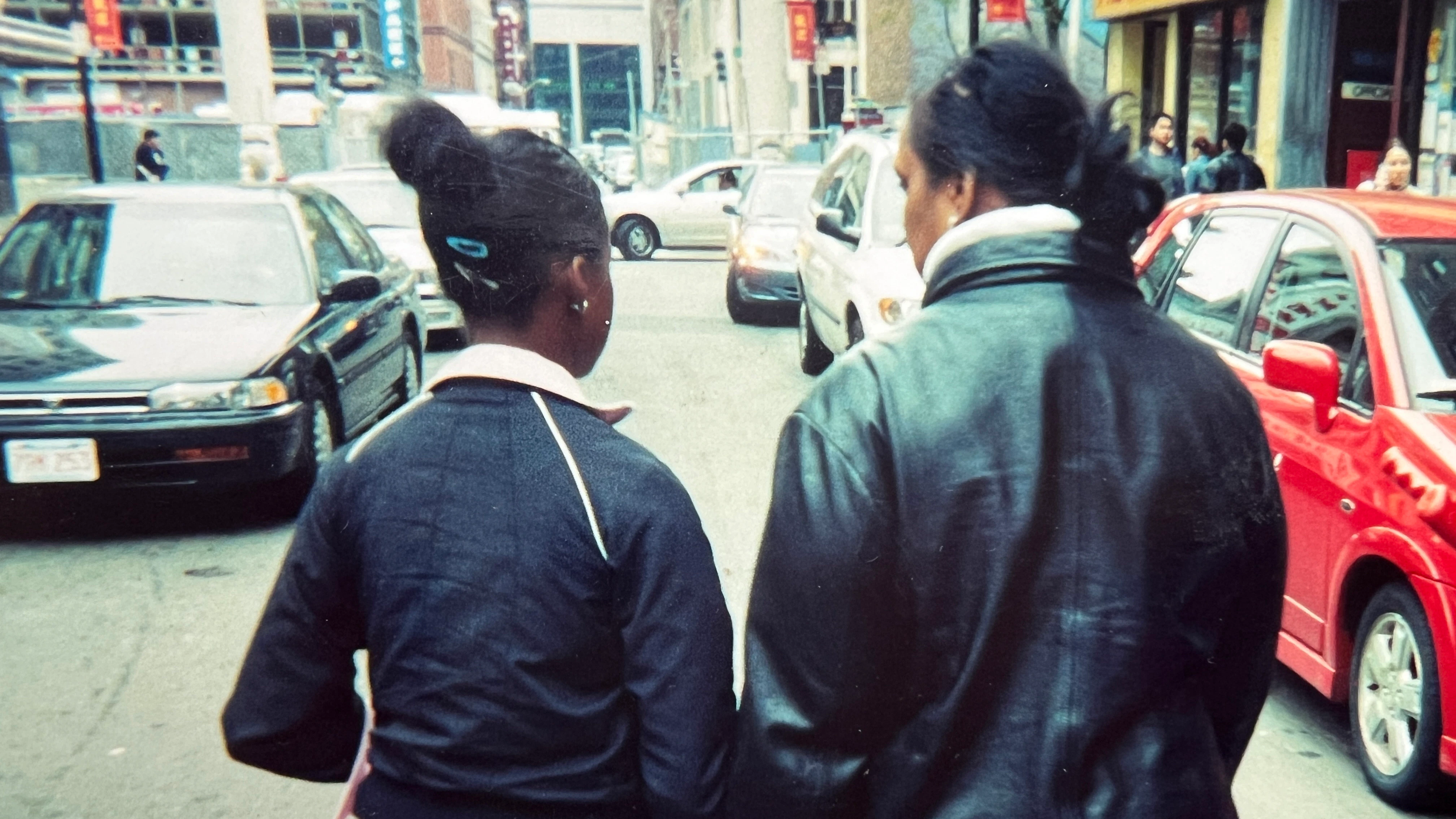
Every summer, I went to England to stay with family in Norwich. One of my cousins was about twenty years older than me and lived in London, and each year I would spend a week or so with her there. Our mothers are sisters. To us, there was nothing remarkable about being together. She was my cousin; I was the little cousin visiting from New York for the summer. But I had already become conscious of how we might look to other people. She was Scottish and Indian, lighter and white-passing in a way that read differently from me, and I was the Black child beside her. This was around the time Angelina Jolie began adopting children internationally, and I sometimes wondered whether strangers assumed my cousin had adopted me. In the peculiar logic of my childhood, she looked wealthy and I looked like a kid in need.
My cousin, of course, had no idea she was participating in any of this. The adoption story existed entirely in my head, shaped by my growing awareness that people expected families to resemble one another. What was completely ordinary between us could become something else the moment I imagined us through a stranger’s eyes.
Around that time, studying BET became one of my favorite pastimes. I watched the women in the music videos closely, taking in the hair, the clothes, the choreography, the iconography of a glamour I was young enough to take almost entirely at face value. Eventually, I graduated from relaxers to weaves. I had spent years straightening my hair to make it nice, only to cover that same hair with the extensions I had seen glamorized on television. I began to understand the limits of my own Imitation of Life. I could straighten my hair, but I could not make myself look like my mother. Maybe, I thought, I could perfect being solely Black instead.
I wore weaves for years, including when I met my husband in 2011. He is Afro-Latino, Dominican and Puerto Rican, and he encouraged me to wear my own hair. Wearing it required me to undo years of cultural conditioning and all the mental gymnastics that came with it. I had to become familiar with it without immediately asking what it could be made into.
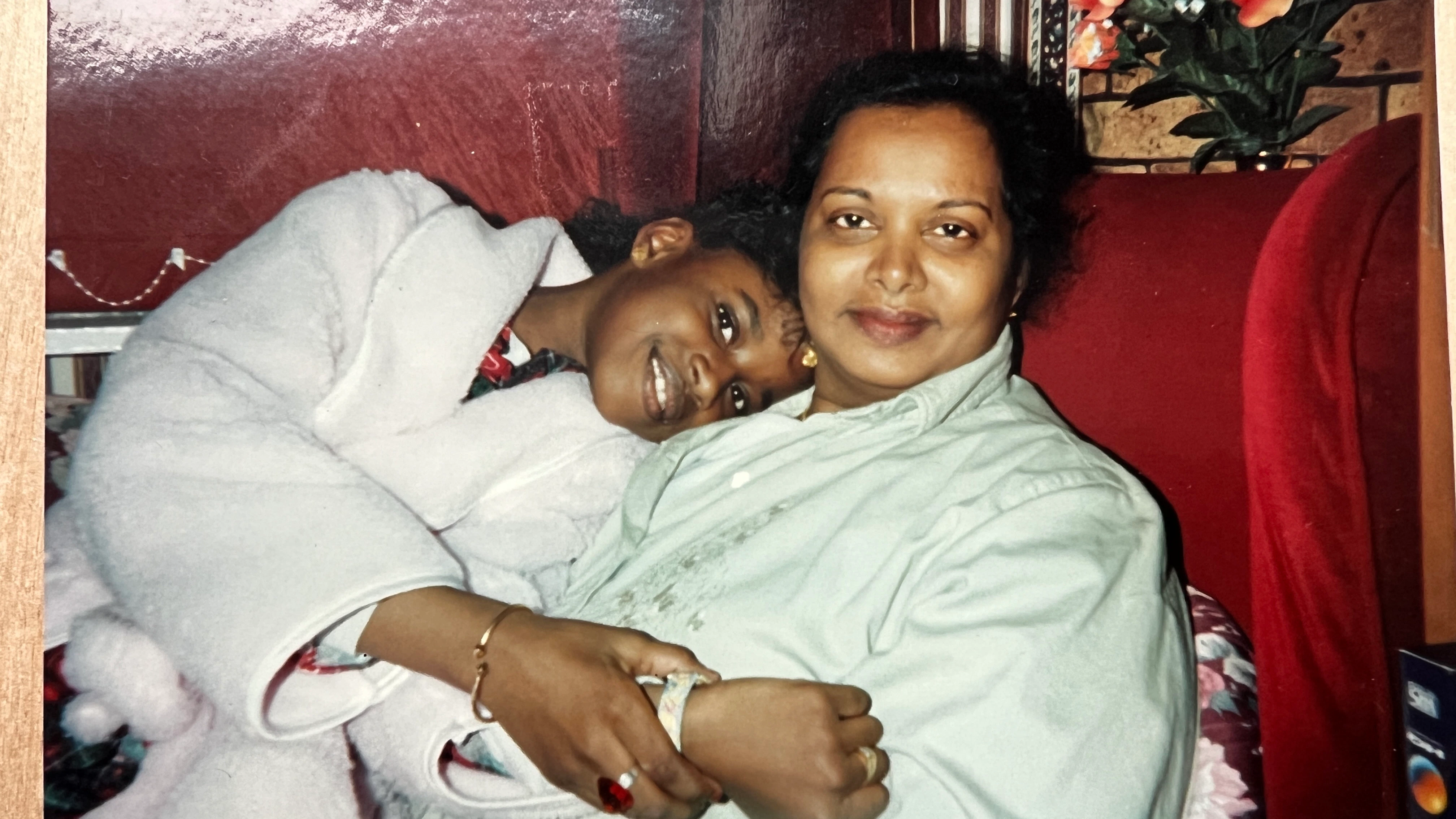
"If I was Black in America, where did my mother go? I understood why I was Black—What I couldn’t understand was why being Black seemed to require everything else to recede."
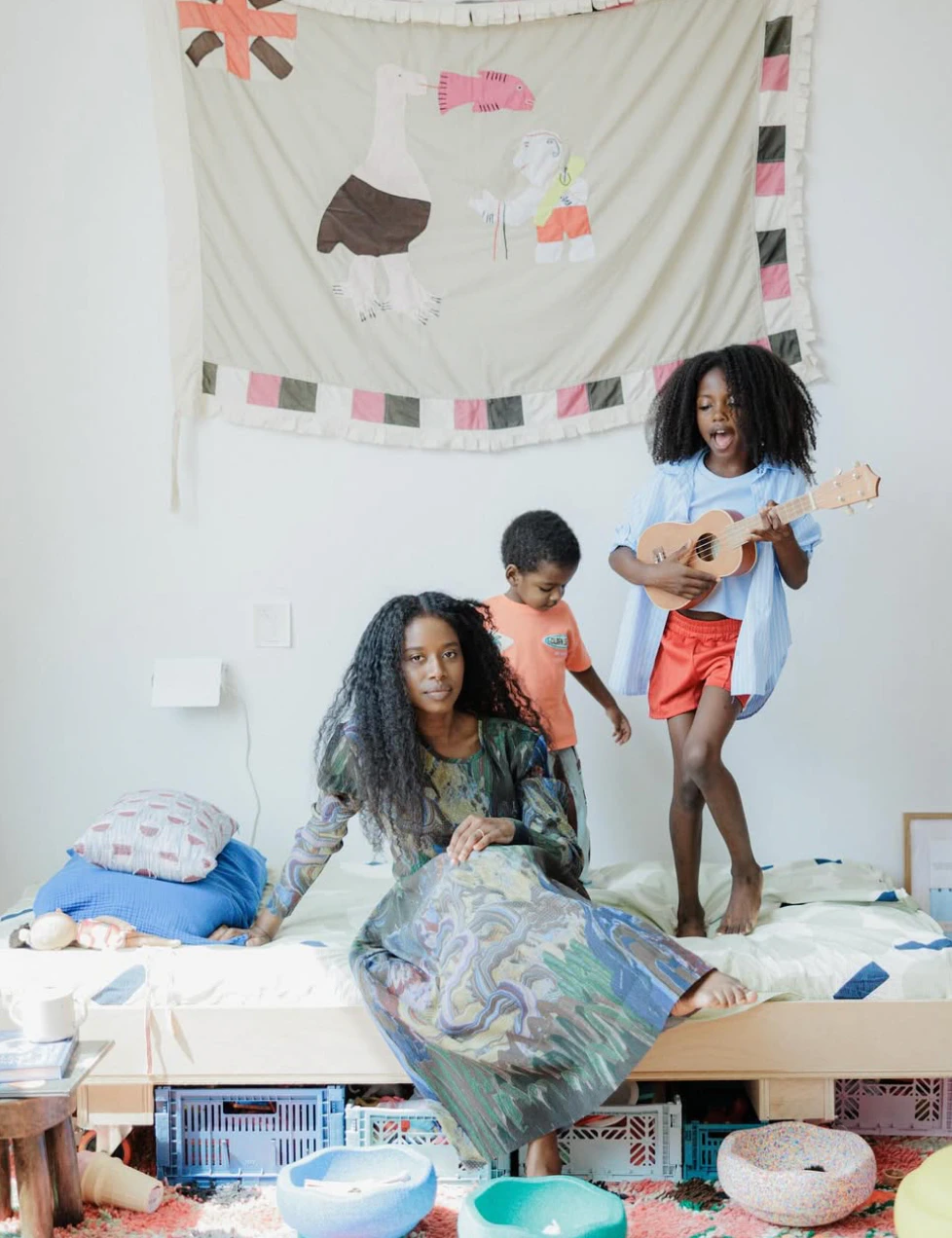
My husband still remembers that when I was pregnant with our daughter, I cried during one of those conversations most expectant parents have about who their child might resemble—whether she would have his almond-shaped eyes, my smile, his temperament or mine, what kind of hair she might have. But the tears were joyous. After spending so much of my childhood wondering whom I resembled and what that resemblance meant, I was about to have someone who might look like me. So naturally, I gave her the middle name Devi as a way to restore some symbolic equilibrium, to place that inheritance somewhere it could not so easily disappear.
My daughter’s birth became an aperture onto that nine-year-old girl, a self I thought I had outgrown. No one sat me down and explained what was preferable. The lessons came in compliments and corrections, sometimes in scoldings and side-eyes. My mother loved me, but she couldn’t pass down a blueprint she had never needed herself. Now, with my daughter, I get to give her some of what I was left to figure out on my own.
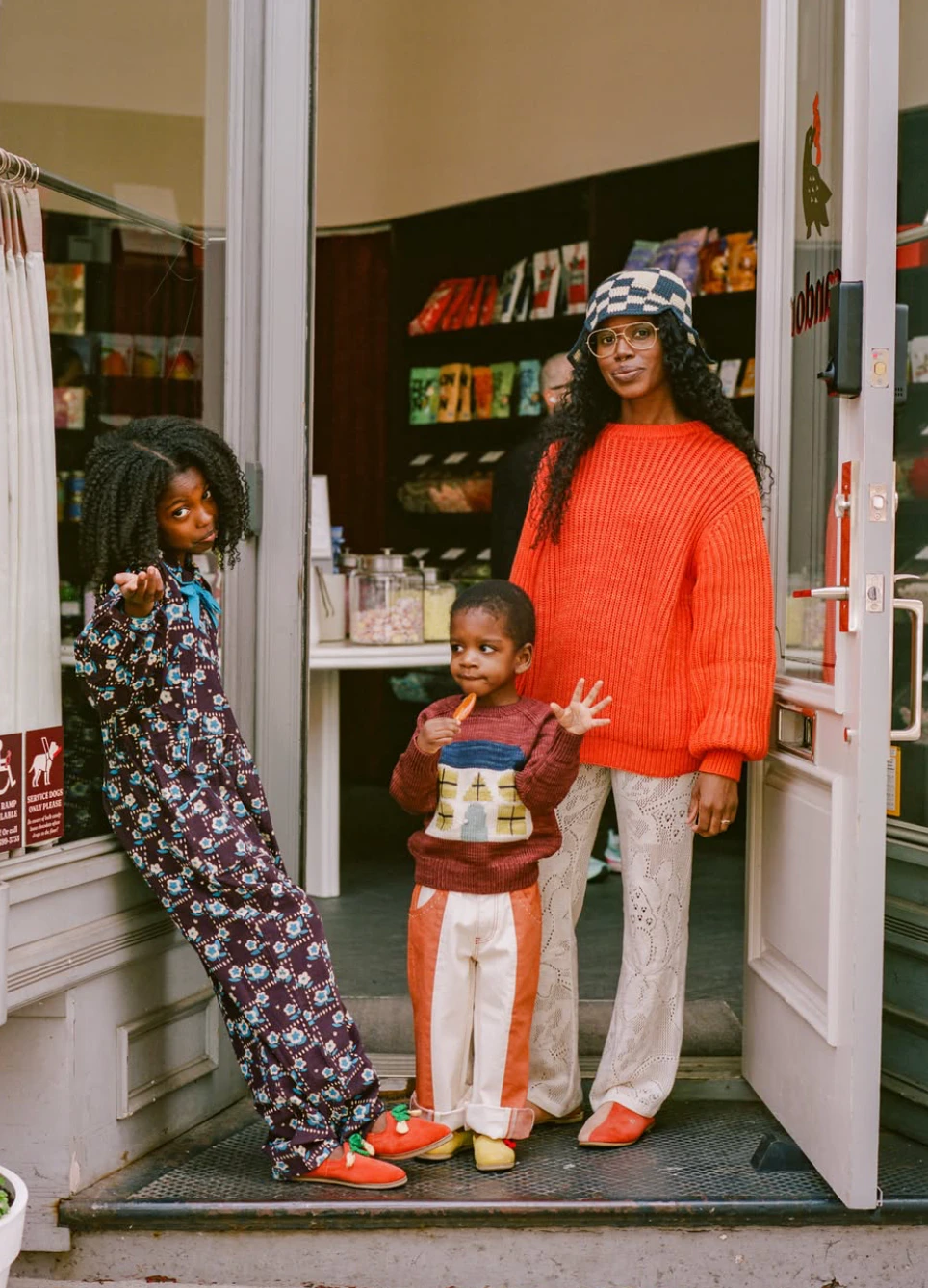
This year, my daughter turned nine, which also happened to be her golden birthday. I had reasonably assumed that her very serious KPop Demon Hunters fixation would dictate the theme. Instead, she asked for a Bollywood party. I had shown her the Indian music videos I grew up watching, and she had taken to them too, practicing the dances and singing along. I was surprised by the force of my own pleasure at the request. So we hopped on the train to Jackson Heights, where even the smell of the neighborhood felt familiar to me. We tasted sweets for the party, our mutual weakness for syrup making gulab jamun an easy favorite, and spent an unreasonable amount of time deciding which flavor of kulfi to try. Then we went looking for saris and bangles. She tried on one after another, her hair in twists, turning in front of the mirror. Something in the image felt uncannily familiar.
At nine, I had already learned a kind of self-surveillance. My daughter seemed free of it. She was busy working out her own color theory, holding bangles against the sari and murmuring little critiques about each combination as she tried them on. In the mirror, she cycled through pose after pose, tilting her head, turning sideways, catching herself from another angle with the certainty of someone who liked what she saw. Then she looked at me and asked, “Don’t I look soooo pretty?”
I said yes, though it felt less like an answer than a confirmation of something she had already decided for herself.
No one else seemed to be in the mirror with her.


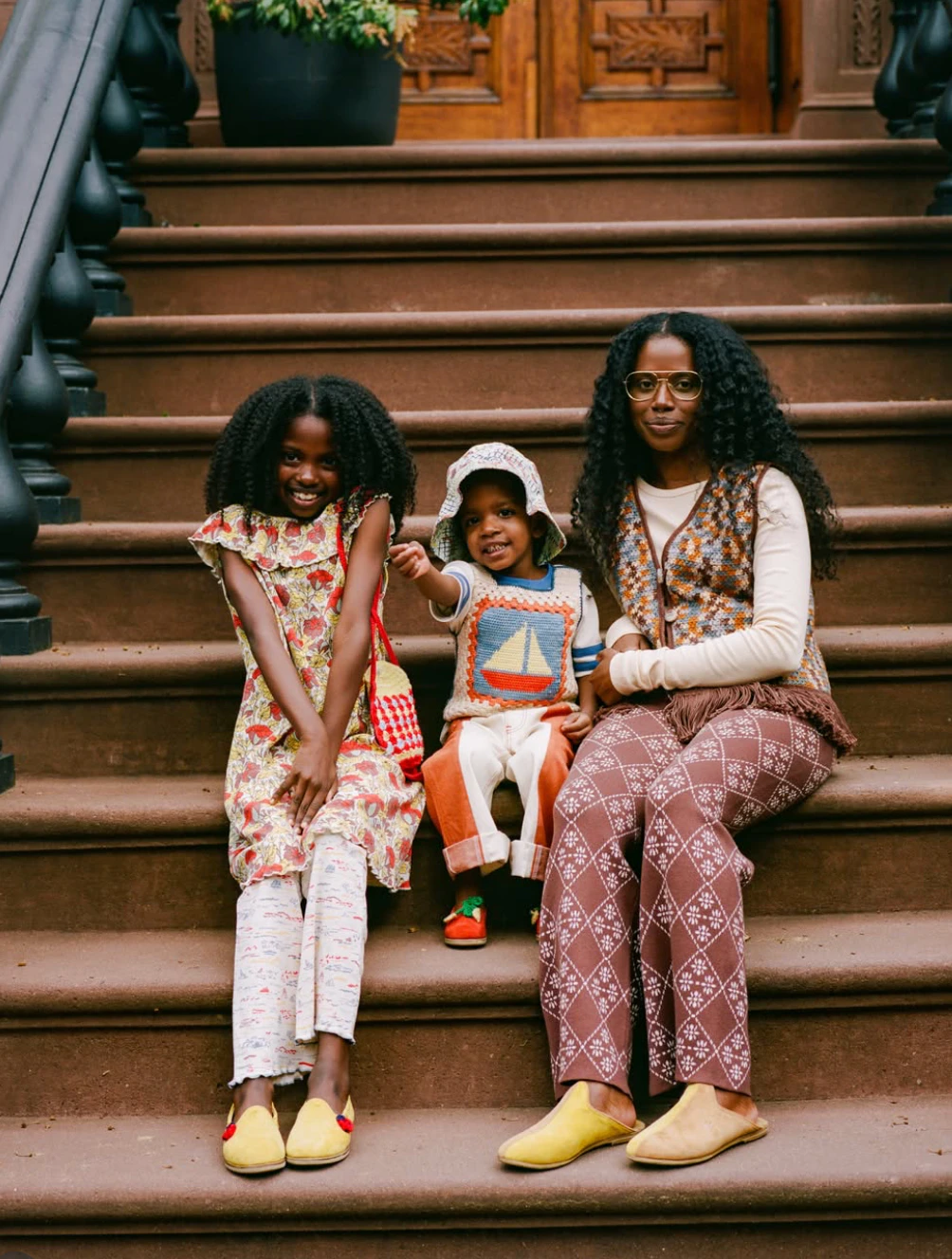
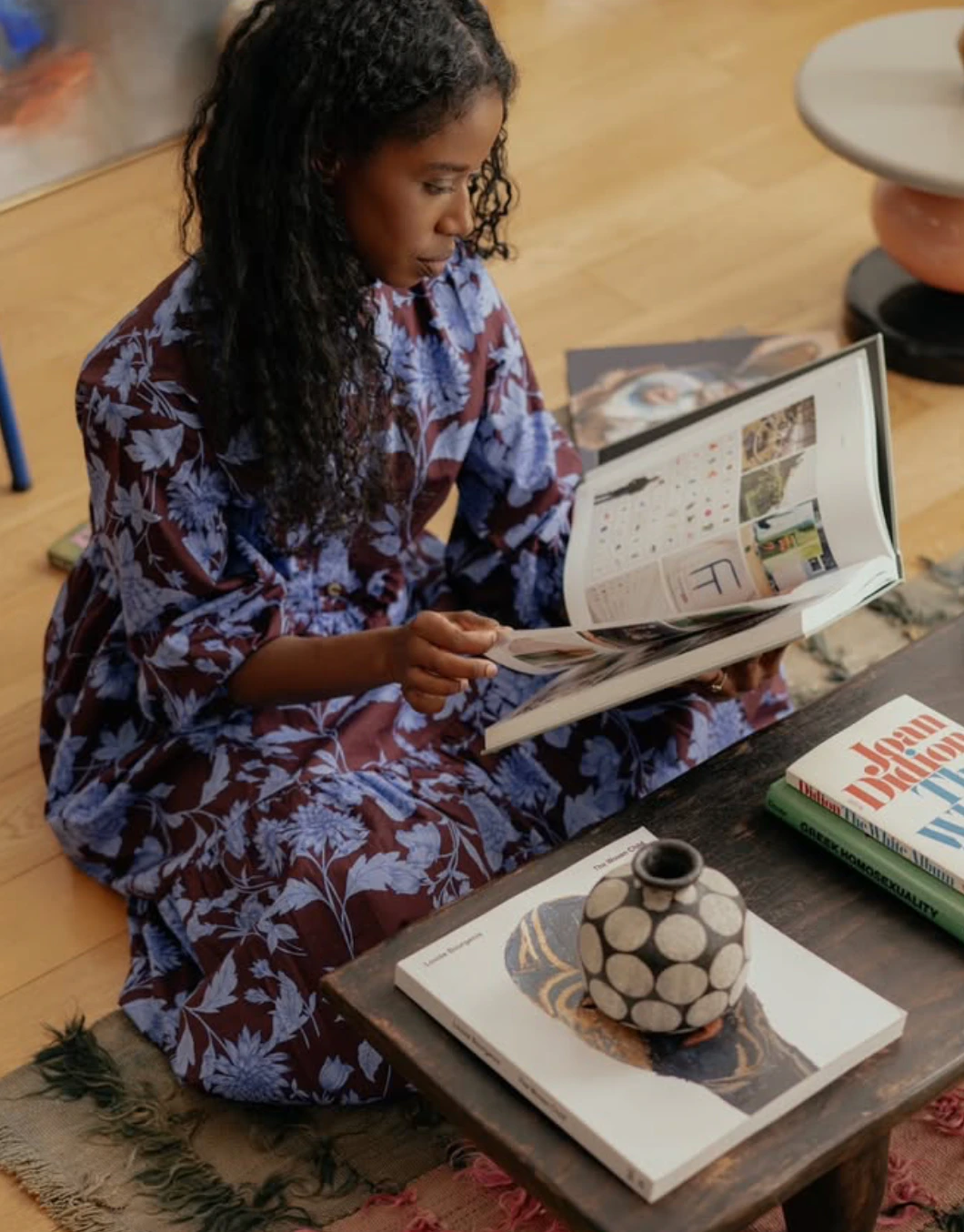
Merie Subryan is a Brooklyn-based interior stylist, designer and creative consultant, and founder of Studio Subryan. She also writes Section Plane, a newsletter exploring cultural criticism through the lens of interiors, domestic objects, and materiality. She lives with her husband, two children, and their Maltipoo, Charlie.