The Caryatids
Dear mom,
“What am I doing in writing to you? Trying to photograph perfume.” —Clarice Lispector
It is a balm and a wrenching that I will never know you completely. The depths of who you were on your own and who you are to me continue to grow. I meet you in echoes of motherhood, marriage, friendship. Ripples that try to translate our shared memories into something nearer your perspective. When this happens, it can make it hard for me to breathe, to see my initial misreadings, the gaps in what I understood life might have felt like for you.
The last thing I told you, searching for the right words, was that you were my best friend. Which wasn’t big enough. I knew as I said it. If I could tell you again, it would be that you’re closer to the world that I walk in. One that you impossibly managed to organize before you left, infinitely into the future.
I had a sense of this years before your cancer. I learned about caryatids, the Ancient Greek female figures used in place of columns—most famously in the Acropolis. Their faces communicate serenity and their are bodies at contrapposto ease, while their heads keep the entire structure from crumbling. I wrote the word “mother” next to the definition. It’s one of my earliest records of recognizing the weight you carried, the “austere and lonely offices” of cleaning, organizing, planning, transporting, feeding, clothing, and financially supporting. Of forming a network of second mothers to replace you when you had to leave for work and, later, for good. Of how graceful you made it seem.


"The last thing I told you, searching for the right words, was that you were my best friend. Which wasn’t big enough. If I could tell you again, it would be that you’re closer to the world that I walk in."
More than a decade later, the ache for you is still primal. This is the painful aliveness of having had you, and proof that I still do. You knew this too, I now understand. You lived most of your own life without your mother.
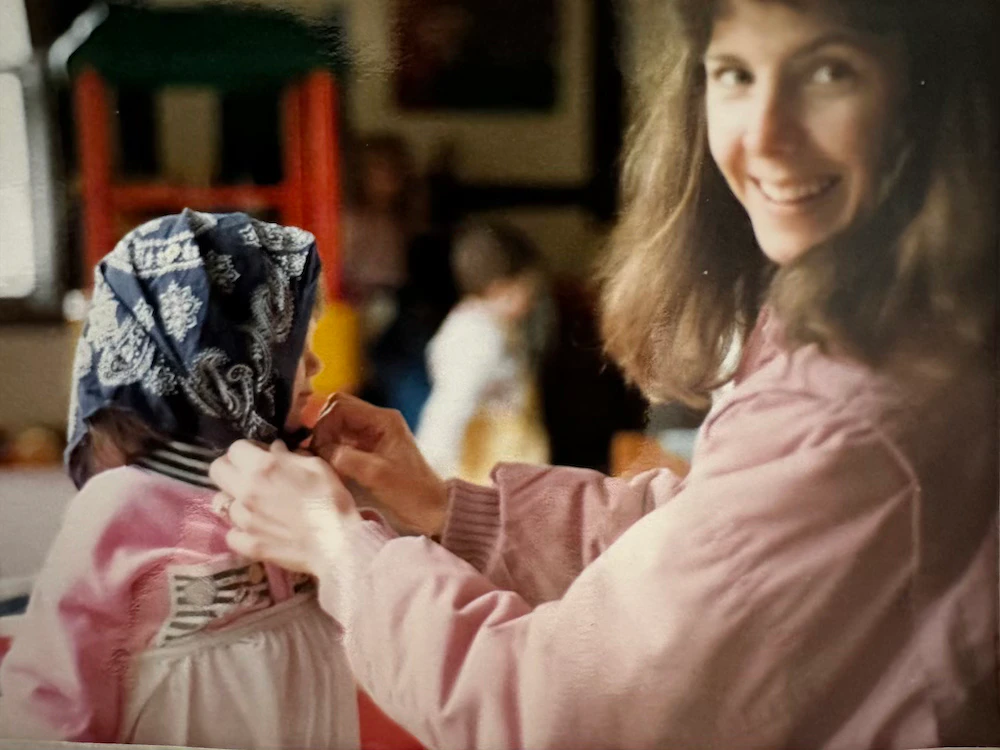
I try to maintain your dimensions. To rescue you from the flattening of photographs and anecdotes. I want my children and husband and the people reading this to know you not as a story, but as a force. A woman who was once young. Who loved and lost and searched. Who sang just because and had an interior life that did not belong to me. Who never had the opportunity to be an adult who was not a full-time mother.
I painted your eye above my daughter’s nursery. We say goodnight to you every night. I bake your salmon, your apple pies. I feed them to the people I love as if I can pass you through my hands into theirs.
When I am lost, I step into you. I ask you, how would you soothe this child? How would you make a life inside this constraint? How did you make me feel so held, so certain, so loved?
"When I am lost, I step into you."
I find you in the places you’ve scattered yourself for me. The pie dough you froze for our first Thanksgiving without you. The mother’s day gift you left for the grandchildren you wouldn’t get to meet. The nurse named Mary, who gently woke me from my stillbirth. The recording I found, days later, of you reading a story to us as children, where you told us that a mother will always find her children, no matter what form they take. The song that came on the radio after we left you for the last time: “When I find myself in times of trouble, mother Mary comes to me, speaking words of wisdom, ‘Let it be.’”
“I am right here,” you seem to say.
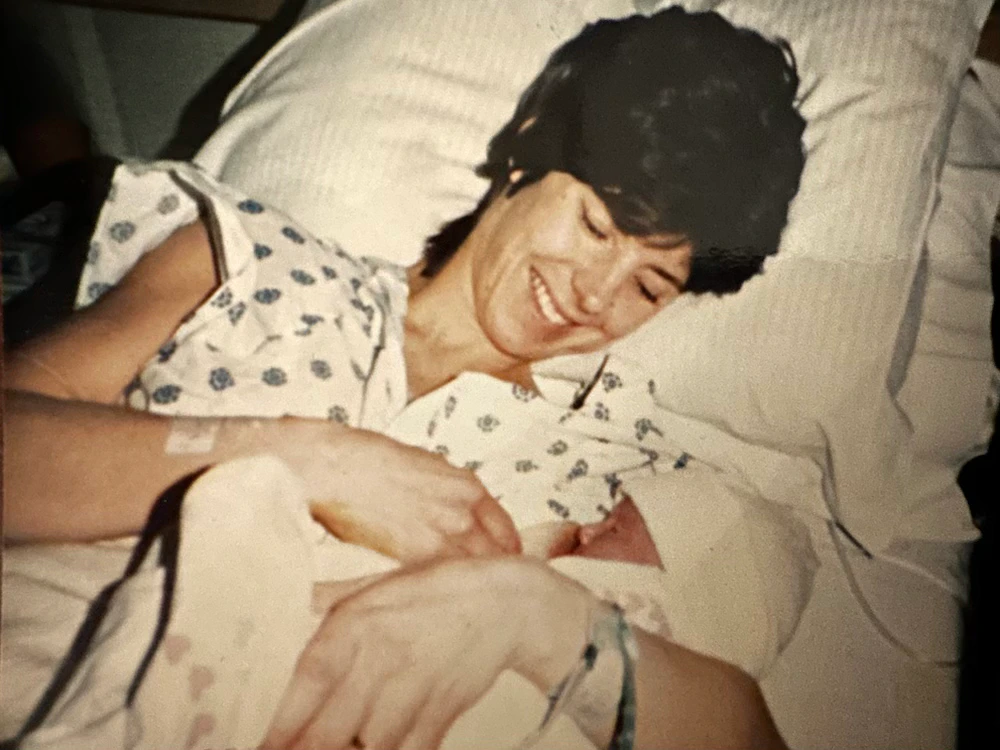
I return to our memories over and over again, not because you change, but because I do. Now, as a mother, I look at childhood photographs of myself and my siblings and see not only the pinkened infants and chubby toddlers, but your maternal adoration that wanted to capture the children who were changing by the day.
Sometimes I dream of you with such clarity it feels like a visit. “Write the book,” you say to me. “When you follow your heart, you’re worth your weight in gold.” I asked a dream therapist I met in passing once what they might mean, and she said: Maybe she is speaking to you. Or maybe you are mothering yourself. Either way—what beauty.



"We say goodnight to you every night. I bake your salmon, your apple pies. I feed them to the people I love as if I can pass you through my hands into theirs."
And when I can’t find you, I close my eyes, the way you taught me. I breathe. I say: I am joy. I am happiness. I am joy. I wait until I feel it, even faintly. The warmth that is you.
There are still things I want to ask. There always will be. Loving you is carrying that, what you carried. I am unbelievably grateful for how you’ve been able to answer.
You were and are an embarrassment of love.
I love you.
Mackenzie Wagoner is a freelance writer, editor, and brand builder based in New York. A former editor at Vogue, Architectural Digest, and Into the Gloss, she has been pregnant three times, grown three babies and (soon to be four), is the mother of one free-spirited, determined living toddler, and the daughter of a woman she hopes to resemble in all the ways that matter.