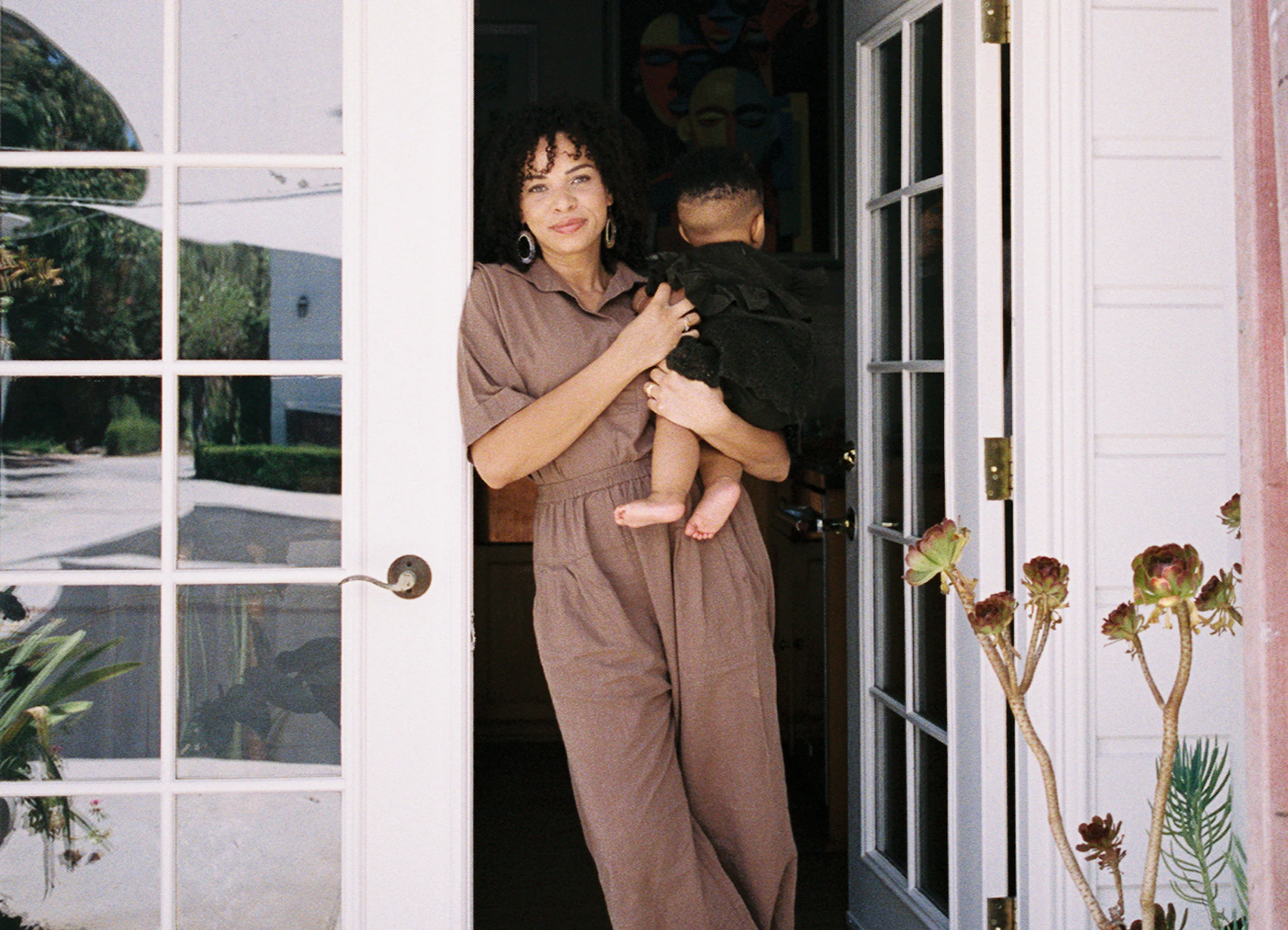
Getting Sticky with Blair Imani
One thing about author, historian, and creator the viral web series, Smarter In Seconds, Blair Imani is she will, in fact, educate you without talking down to you at every turn. And when it comes to motherhood—she had her baby TK, TK long ago—she’s already learned a lot and isn’t afraid to share her wisdom.
Praised by The New York Times for her innovative ability to create “progressive lessons with vibrant visuals and a perky, quirky delivery,” Blair has redefined how learning is absorbed for an audience of millions across the globe. Her scholarship is rooted in intersectionality, gender studies, race, sociology, and American history. She often draws upon her lived identity and activism as a Black queer Muslim woman, her experiences causing her to have radical empathy which has been instrumental to her profession as well as her journey through new motherhood.
Below, Blair speaks about her transformative pregnancy, the complexities of postpartum recovery, and her steadfast commitment to advocacy amidst the evolving challenges of today’s world.
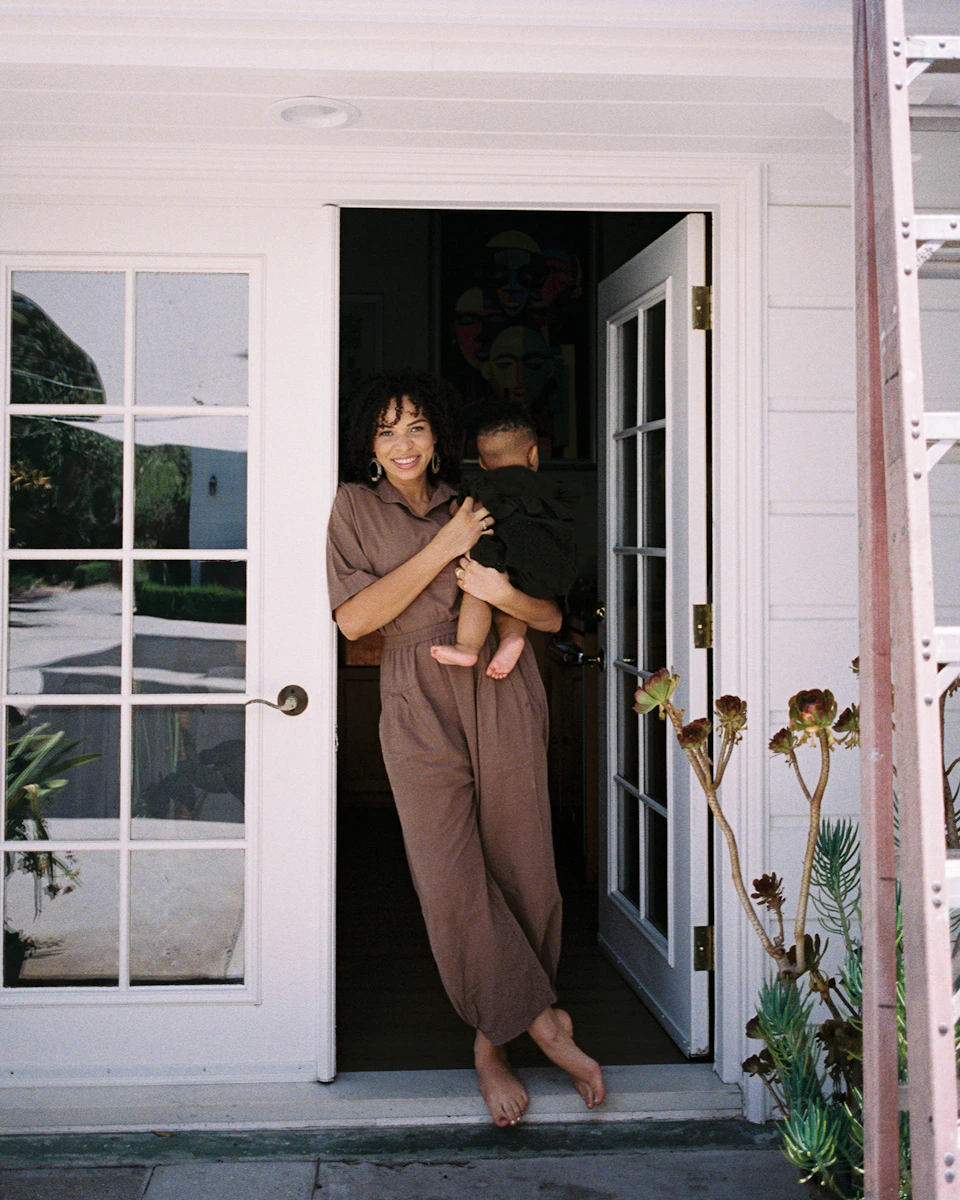
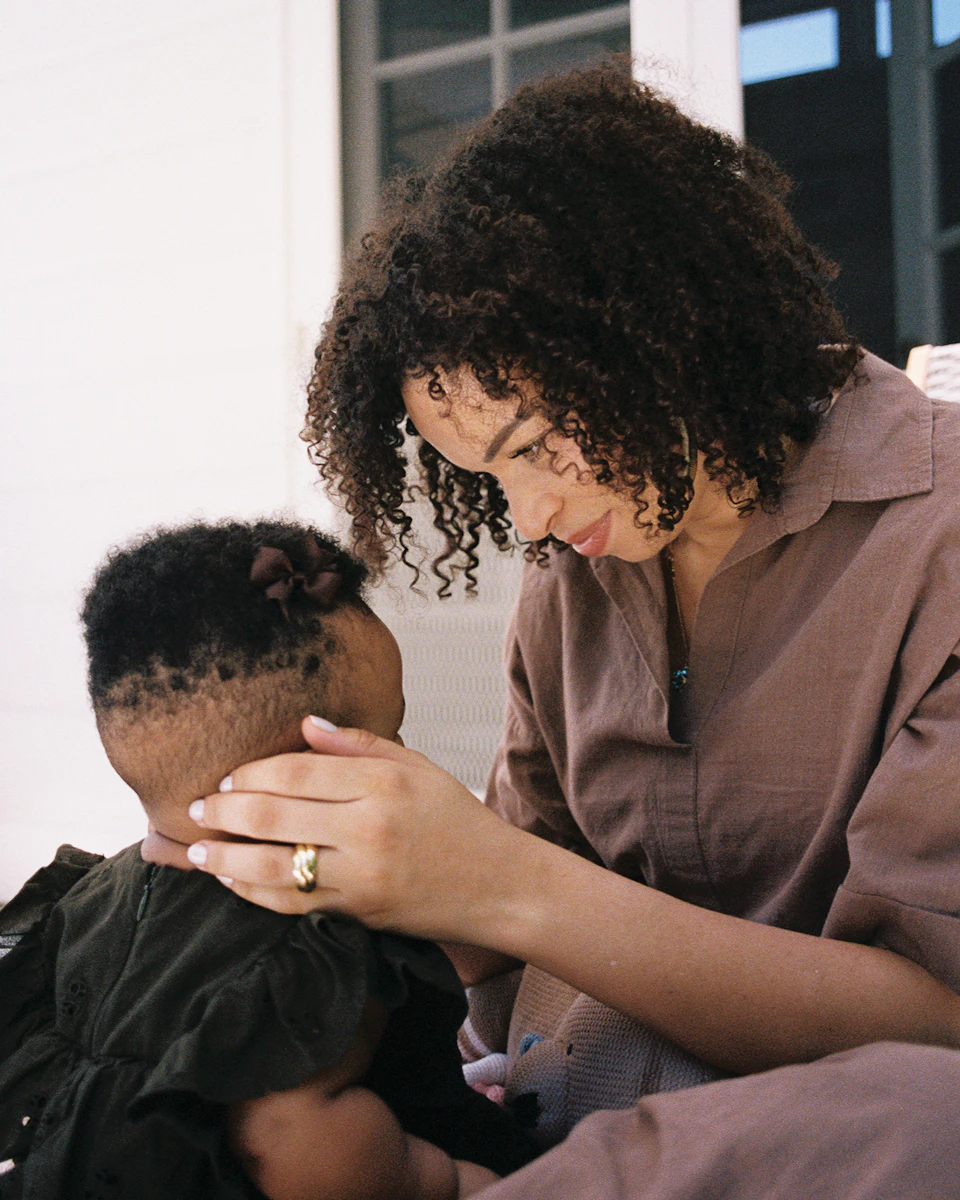
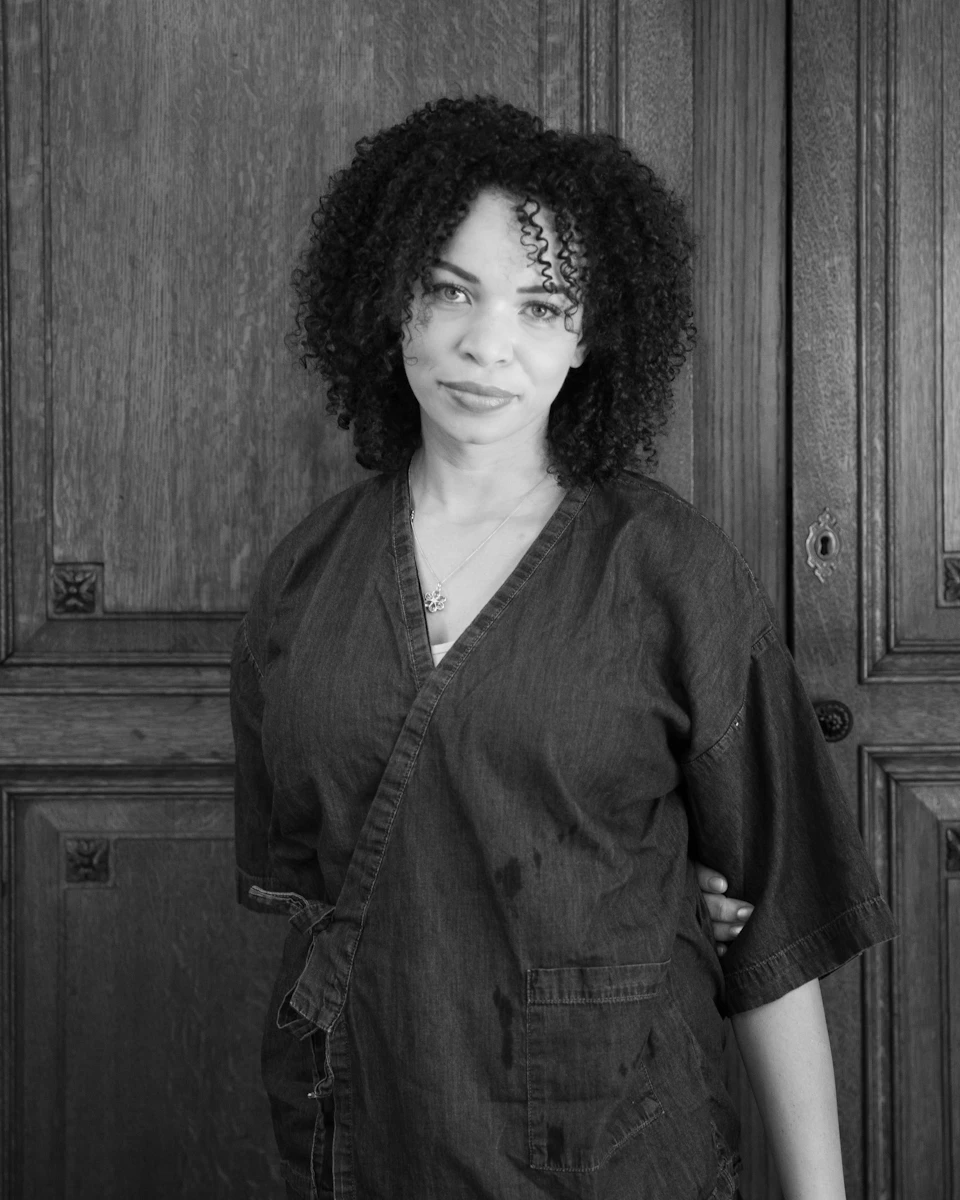
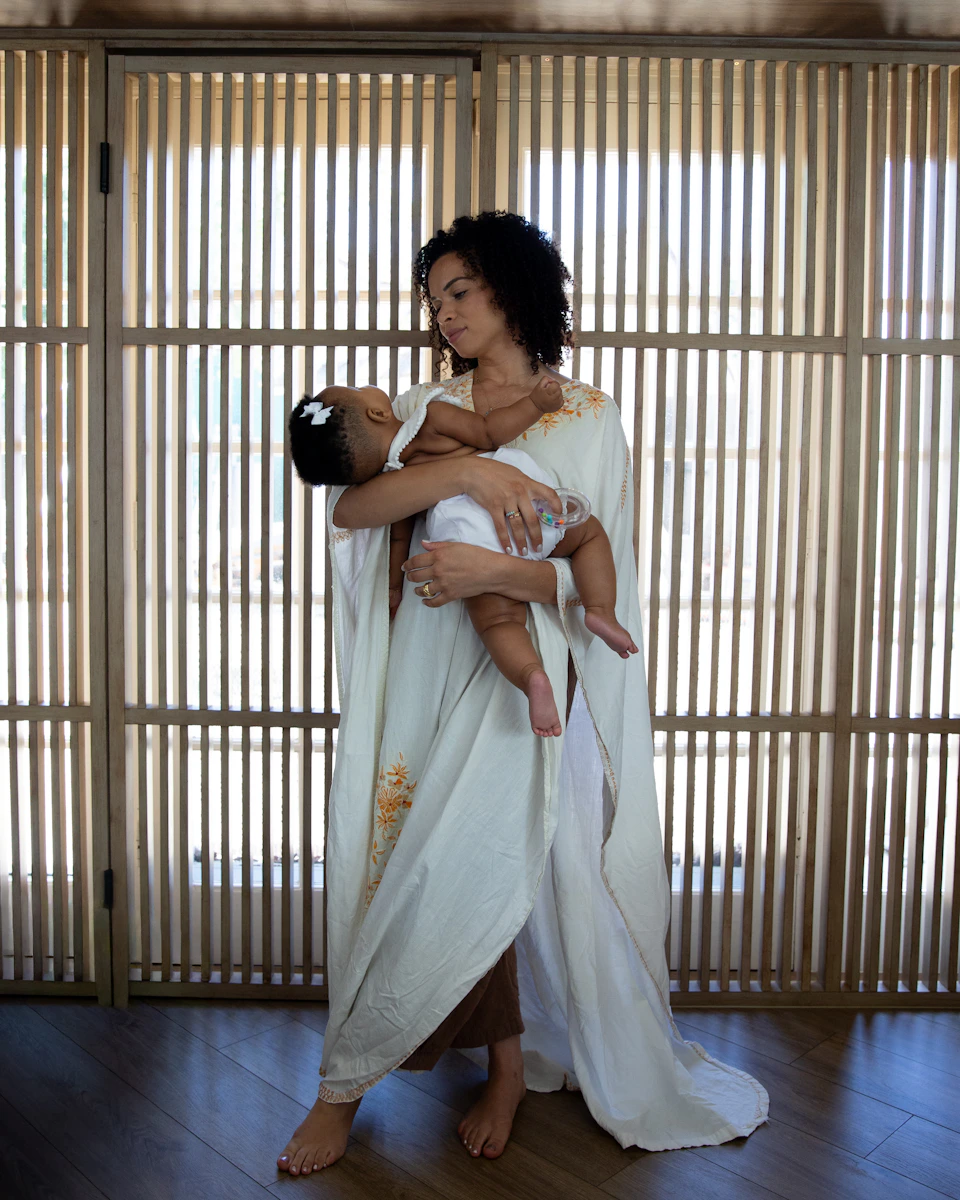
Words by Synclaire Warren, Images by Lindsay Molk.
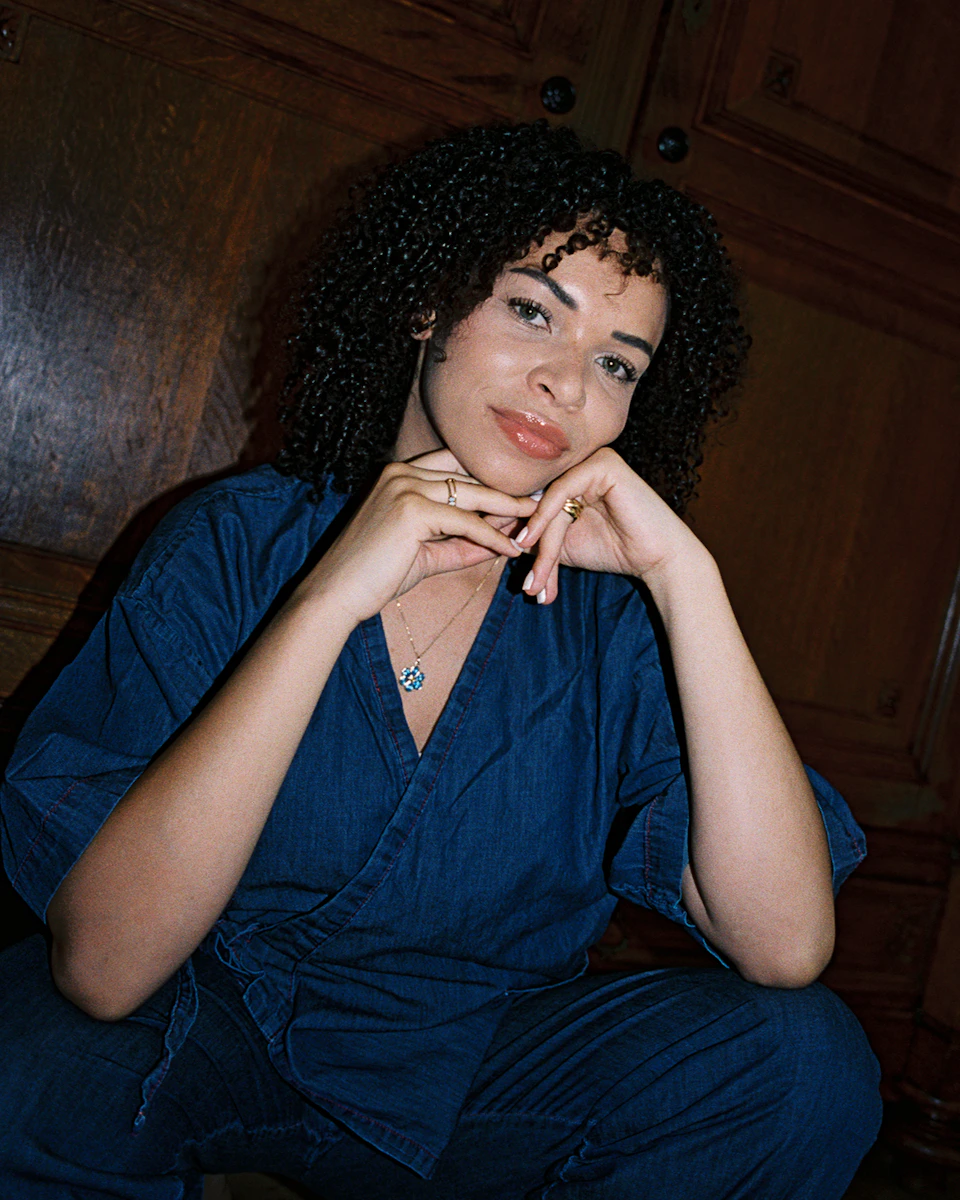
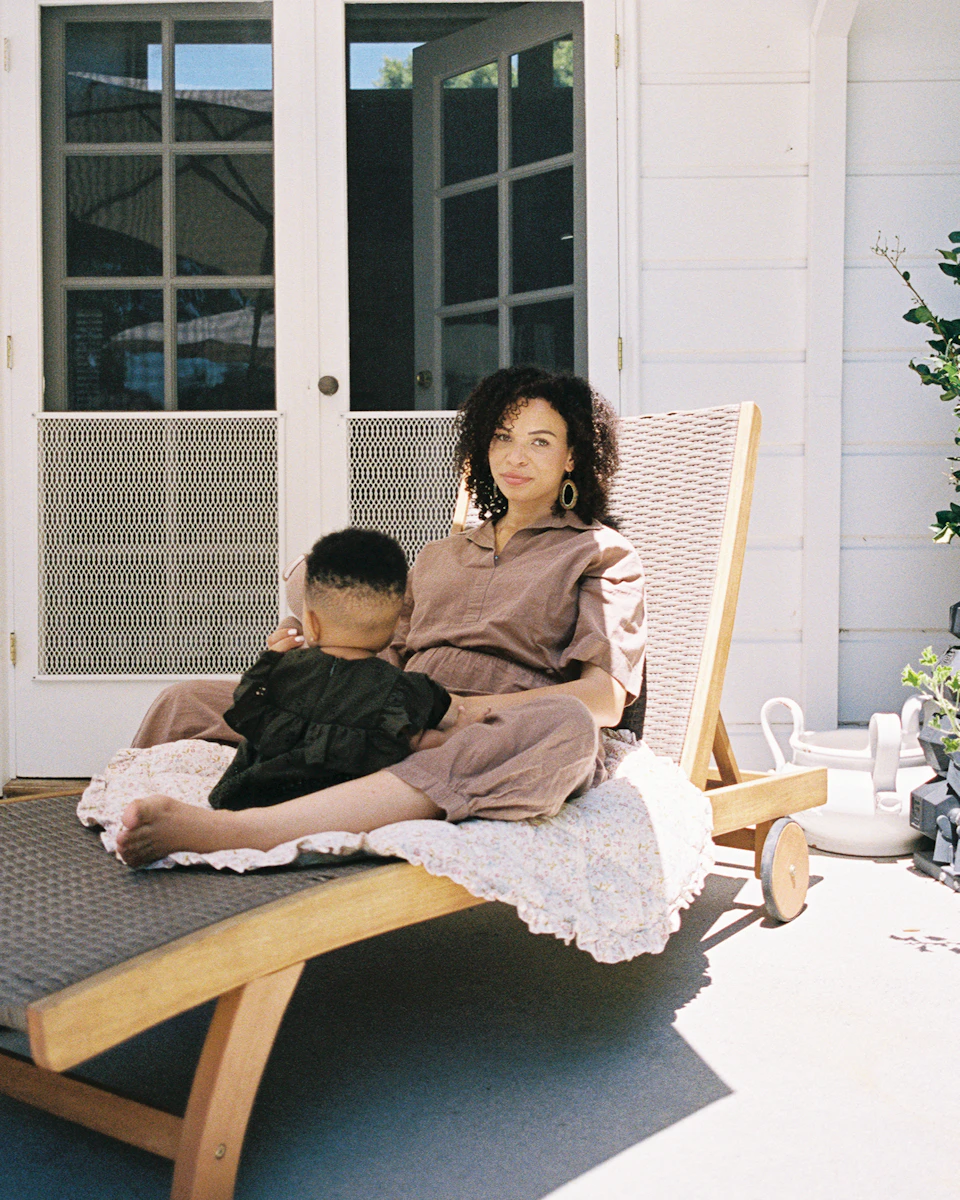
"Two months after stopping the pill, we were pregnant. While I was happy and excited for my belly to show, a friend told me, 'Please stop telling me about how great your pregnancy is. You're making me feel like s***.' Not everyone’s pregnancy journey is as straightforward."
Being pregnant for Blair was, actually, a joy!
Preparation for me felt like all roads leading to a baby. As part of our family planning, my husband and I took pregnancy preparation very seriously. He started CrossFit two years beforehand, and we began going to the gym together to get in shape for children. I have a chronic illness, and given our family history of various medical conditions, we wanted to be as optimized as possible before trying to conceive. I am grateful for that preparation; now that I have a healthy, chubby baby, I rely on that upper body and back strength.
Having worked at Planned Parenthood, I am a big advocate for reproductive health. My journey to motherhood involved being intentional about birth control, understanding my timeline, and prioritizing my physical health to ensure a thriving pregnancy. A year before conception, I switched to a mini birth control pill—a lower-dose hormone option that required strict daily timing—which I followed diligently. Two months after stopping the pill, we were pregnant.
While I was happy and excited for my belly to show, a friend once told me, ‘Please stop telling me about how great your pregnancy is. You're making me feel like shit." We were very blessed, as I know not everyone’s pregnancy journey is as straightforward. Having experienced pregnancy loss in the past, I remained nervous and apprehensive. I often needed reassurance, telling myself, "Let’s just go for one more ultrasound to see the baby," especially during the time before I could feel her kick. Once she started kicking, I felt relief knowing she was thriving. Aside from those moments of anxiety, I fortunately didn’t experience much nausea. Throughout the pregnancy, every day was like my birthday and everybody was so happy for me.
The anti-unsolicited advice club
One thing that I really did not love was all of the unsolicited advice and trauma dumping that came. I totally get why it happens. I think sometimes people who have had traumatic pregnancies or births. They see someone pregnant and it brings them back to that place and then they can start to share their worst experiences. They're not trying to hurt your feelings or anything, but that was definitely a tough thing to go through. I also really started sharpening up my zingers and my responses. There was this one guy, I can't even remember what my response was, but I totally got him. I got in the elevator and he was like, "Oh, you're ready to pop any day now." And I like made him feel bad for saying that cuz I was like a few months along.
I think that as much as I am like a working mother and I have continued my life kind of in the same regard as I did before I had the baby. I was also very prepared for different realities, and I was made aware from the other moms in my life that your life isn't just yours anymore. You have to be there for your child all the time. I had to have a mindset shift of like it's not just Blair in the world, it's Blair and baby.
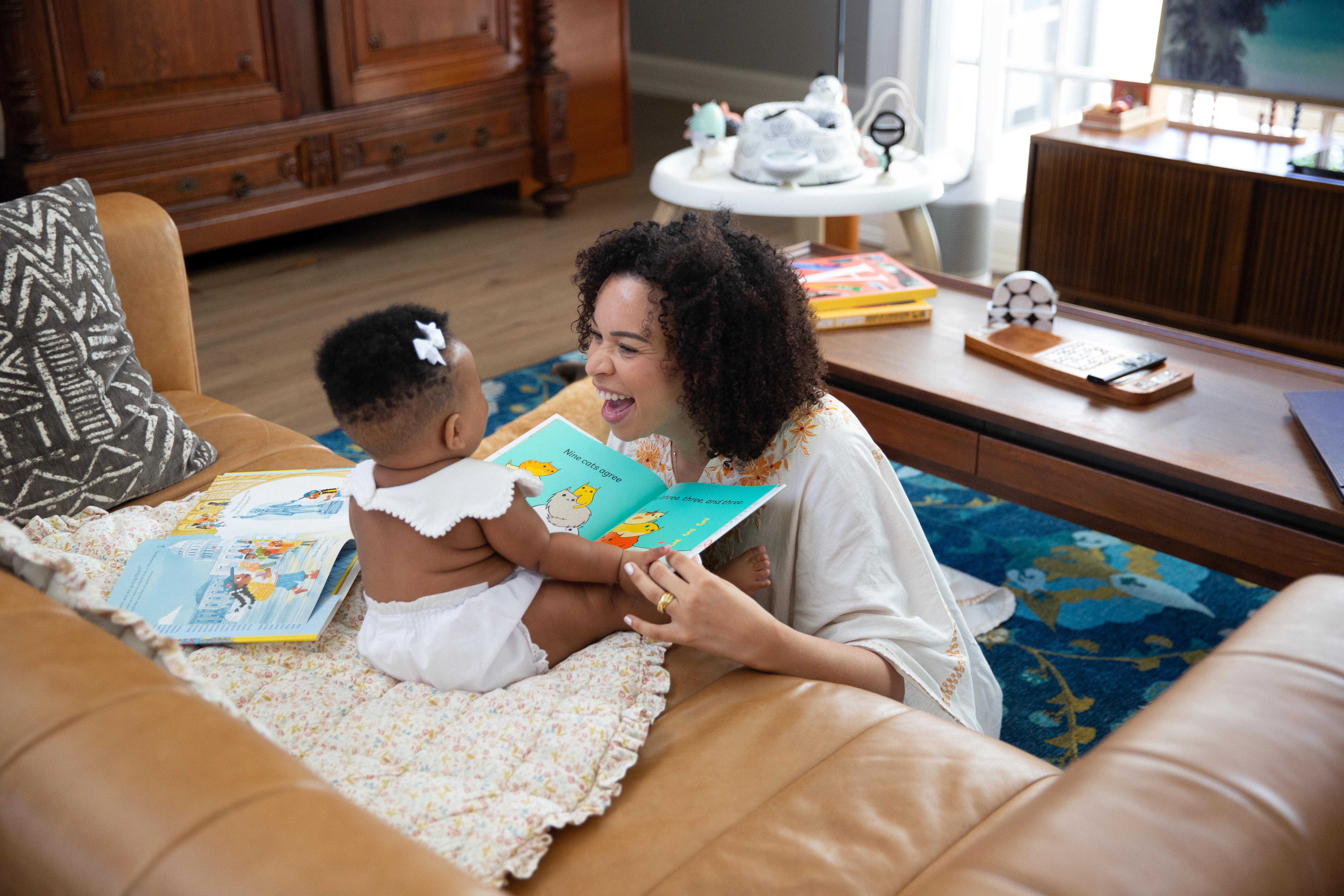
Letting education lead the way
During my pregnancy, I had no choice but to confront the reality of racism directly. It was a layered experience. Even though I was well-versed in maternal mortality statistics—a subject I had extensively studied—the situation shifted once I was actively searching for an OB/GYN. Being pushed to schedule a C-section at 25 weeks, knowing that Black women are disproportionately pressured into this, made me realize, 'The racism is happening; you can't escape it.' With that awareness, I planned ahead: I banked content to post while pregnant so I could enjoy my baby for an undisclosed amount of time while the public still thought I was expecting.
“All births are difficult. All births are beautiful. All births are birth.”
The birth was great. I really wanted a vaginal birth, but I wasn't trying to be an essentialist. My perspective on birth is that some types are prioritized over others, but all births are difficult, all births are beautiful, and all births are birth. Some births involve medical interventions and some don't. That really resonates with me and the people I'm in community with, and it has become my motto. Going into the birth, I created several different birth plans. I got a doula who was incredible and highly recommended by a friend. I had my ideal scenario, but because I live in the real world, I also had a “bubble burst" scenario in case I needed an emergency C-section or if an anomaly occurred.
I thought that was really important and I really thank my doula for encouraging me to do that because that way, I knew that my voice would be part of the process regardless of what happened. That was really reassuring especially because a huge part of my pregnancy experience was just being really aware that for Black women, the statistics are worse. The maternal health in this country is abysmal for everyone in the United States but for Black women, we are more than three to four times more likely to die as far as maternal mortality outcomes go. So before going to the hospital, I made sure all my bank accounts had a beneficiary on them and I created end of life plans, which was very intense. But this was also another way that I was able to make sure that my voice was part of whatever the outcome was.
My OB-GYN was as focused on my concerns and worries as I was, especially regarding my experience as a Black woman. Right out of the gate, the doctors and nursing staff at the hospital were aware of different health outcomes and the ways that Black women are often disempowered during birth. One of the nurses, a white woman, told me, "If you are ever in pain, I am here to support you if you need medication. Black women are sometimes not believed when it comes to pain, and that's not going to be the scenario here.” I thought that was awesome because she immediately named these realities and committed to being there for me. People were asking for consent all day long, and it was great not to feel like a test subject.
I then got into my political bag, which I love to do, by starting a conversation with the nurse about how RFK Jr. is trying to ban medications like those used for abortion. The nurse was so sweet, but she simply said, "Ma'am, I can't even with that." I was like, "Go off, queen."
After my advocacy moment was over, I went to sleep. I slept through most of the beginning of the contractions and labored in my sleep, which was awesome. In the middle of the night, the nurse came in and told me they were monitoring the baby's heartbeat because it was getting weaker with every contraction. The way she told me didn't freak me out, even though it was scary news. Every step of the way, they were caring about my mental health and well-being while keeping me informed.
I asked for an epidural, and then spent some hours waiting for my water to break. I ended up having a doctor break it because I was getting impatient. A male doctor performed the procedure; as a Muslim woman, I would have preferred a woman, but I had noted in my birth plan that I was okay with any medical professional in the event of an emergency. My doula massaged my legs throughout the whole experience, which felt very luxurious and supportive. If anyone is on the fence about having a doula, they should 100 percent get one because they carry so much of the emotional labor of birth. It was a really beautiful experience. It wasn't agonizing or traumatic, which was a huge relief since that had not been the experience for some of the other women in my family. I was pushing and she had a hard time getting over my pelvis. They had to get a vacuum. This whole time I'm like, "Do I need a C-section?" And the doctor said, "No, not a C-section. We have to get the vacuum. Is that okay with you?" And I said, "Yes." She said, "Okay, good because I'm really good at the vacuum." And I was like, "Talk your shit, doctor." And she just vacuumed the baby.
At that moment, I was like, "I'm going to make it. I'm going to make it through this experience alive, and my daughter is, too."
"The maternal health in this country is abysmal for everyone in the United States but for Black women, we are more than 3-4 times more likely to die as far as maternal mortality outcomes go."
When things feel uniquely heavy, it’s time to get help
The postpartum period initially felt like living in a daze, an overwhelming fog where the immediate needs of a newborn—like managing jaundice and frequent medical appointments—completely upended my visions of a restful recovery. I quickly realized that whether you have a vaginal birth or a C-section, you are recovering from a major physical and life event that demands time and grace.
While breastfeeding went well, the isolation of the experience was intense. I felt a delusional sense that no one else had ever raised a baby, making the journey feel uniquely heavy. It wasn't until I started feeling better that I could recognize the postpartum depression I was navigating. By being intentional and scheduling a six-week check-in with my therapist, I was able to get an official diagnosis and the support I needed.
Now that I feel better, I can clearly see that I was experiencing postpartum depression. It can be hard to recognize that you can have a better state of mental health, but you 100 percent can. That's why I'm a big advocate for mental health support. I am now taking Lexapro and Ativan, which have been very helpful. For me, the depression manifested as an intense feeling that I couldn't put the baby down, despite having significant support and help. I felt she should be in my arms at all times. While that created a beautiful bond, it was also overwhelming; I struggled to lay her down safely in her bassinet even to perform basic tasks like washing my face or brushing my teeth. Simultaneously, I felt a paralyzing fear of being alone with her or a sense that I wasn't capable of handling the responsibility.
Finding community through mom support groups was a turning point. I joined a group called Maze in Southern California, which was incredible. Being social with other new moms allowed me to realize these challenges were a shared experience rather than a super isolating one. It was through these connections that I began to regain my enthusiastic, peppy self. As parents, we are also navigating the evolving needs of our daughter, including her growth and development, while carefully managing our own mental health and postpartum recovery.
The world we want to raise our kids in
Witnessing the climate crisis firsthand—with friends forced to evacuate homes and essential environmental protections being rolled back—has driven me to advocate for basic necessities like clean air and water. This desire is global; people everywhere are calling for economic security and a healthy environment where children can simply be safe and well. As her parents, we are dedicated to keeping her empowered and knowledgeable through these changing times, sharing the lessons we've learned through our own journey.