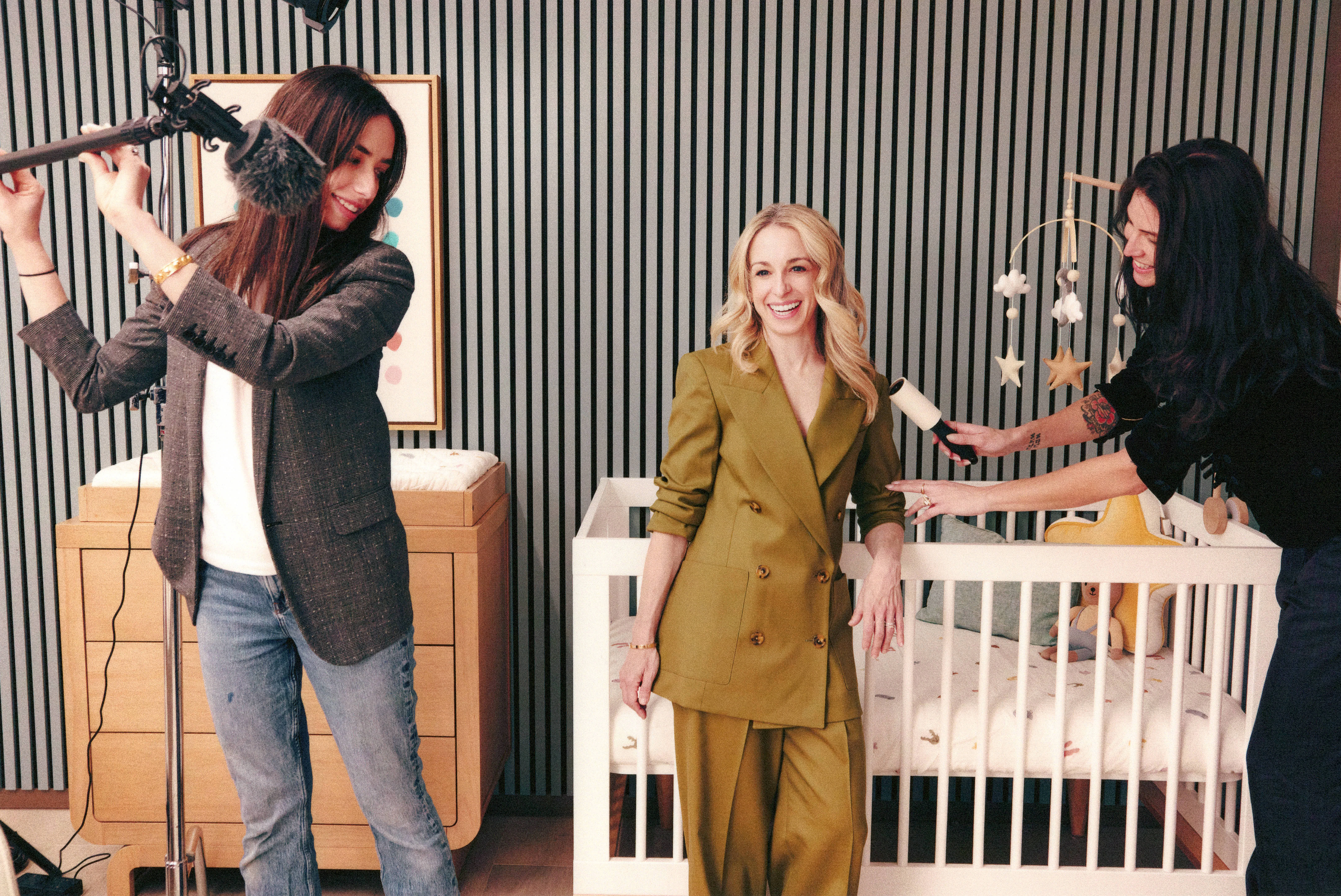
Getting Sticky with Dr. Becky Kennedy
In the parenting world, Dr. Becky—or Becky Kennedy as she’s known IRL—is a juggernaut. Her seminal book, Good Inside: A Guide to Becoming the Parent You Want to Be, sold over one million copies, was translated into multiple languages, and sat on the New York Times bestseller list for months. She speaks to her 3.5 million Instagram followers almost every day, and her app Good Inside has created a community of over 100,000 engaged parents who are doing the hard work of parenting each day with cohesion and in community.
In her personal life, Kennedy is the mother of three—running from Good Inside’s Times Square office to far-flung lacrosse games and school events. At the beginning of her career—after earning a doctorate in clinical psychology at Columbia and working as a clinical psychologist—she led small groups of postpartum women and new parents. This week’s launch of Good Inside Baby, which starts at the pregnancy stage and ends at age two, is a (much-requested) return to those roots.
And make no mistake, while Good Inside Baby will have practical guides around sleep, feeding, and the emotional reality of becoming a parent—supported by experts in each field—there will also be guidance around the existential changes that occur in motherhood, starting with work in the pregnancy period around identity shift. Below, Dr. Becky gets personal about her own birth story, finding herself again post-baby (hint: rest a little); and the importance of doing bath time with friends.
(Editor’s note: This is probably the lengthiest Getting Sticky we’ve ever published but we couldn’t bear to cut a single more word from our emotional interview with Dr. Becky.)
Photographs by Reuben Chamorro. Words by Emily Barasch.


"This was the beginning of realizing this parenting thing isn't the same as studying for a test. Historically, I knew what to study. I could write the outlines. I could put in the hours. I learned that effort equals successful outcomes. Starting with IVF, I think I realized, wow, those are just separate things."
IVF, the great unlearning
My trying to conceive journey, I've learned now, is similar to so many of my friends’. But I didn't know it at the time. I wanted to become pregnant. I couldn't. I went through all types of fertility treatments that didn't work. That landed me on the IVF journey. I think that was probably the beginning of realizing, although it didn't really hit me then, that this parenting thing isn't the same as studying for a test. Historically, I knew what to study. I could write the outlines. I could go get extra help from the teacher. I could put in the hours. I learned that effort equals successful outcomes. Starting with IVF, I think I realized, wow, those are just separate things.
Dr. Becky’s birth story
I had my first via an emergency C-section. My water broke in my kitchen. I just remember that moment because I was in such denial. I was 38 weeks and I don't know why I hadn't even considered my baby would come early. I think I'm someone who thought there was a plan and that plans are meaningful.
It was early in the morning and my husband goes, "I think your water just broke." I said, "I don't know. Maybe it's just pee." I’ll never forget, he goes, "When was the last time you peed on the floor of our kitchen?"
So I went to my doctor who sent me to the hospital. I had this amazing nurse and I will never forget her shoving an IV so fast into my arm. Then they came to talk to me about the heart rate dropping and having a feeling there might have to be something done faster.
Then I had a cord prolapse, so all of a sudden I was rushed to the ER. They asked me, have you eaten anything recently because we're going to have to put you under anesthesia? There was no time for an epidural; I needed full anesthesia. I just remember saying, I just ate a bagel. The next thing I knew, I was waking up groggy with my son who was perfect and healthy and just incredible. That was the beginning of my parenting journey.
Best laid plans are just that
Talk about not going as expected. I had a plan for a certain vaginal birth, not a C-section. My husband was the first person to do skin-to-skin, not me, because I was still out from the anesthesia. I remember thinking: What just happened? What just happened to me? It was such an emergency. I later learned how dangerous cord prolapses are even when you're in a hospital that has excellent medical services.
But I didn't know it at the time. I just remember being groggy at first and it took me a few days. I can be someone who just moves to the next thing. I'm not always good at pausing and taking in the enormity of something.
“I remember him looking at me as if to say: Oh no, you've gone to the dark side.”
I got home from the hospital. When I have uncertainty, I act. I enjoy doing things and being productive. It can look very efficient and productive to other people, but I think it's driven by some amount of anxiety, trying to just move on and not sit with something that's hard. I had this intense birth experience and I wasn't taking good care of myself. One morning, I said to my husband: “I think I only need four hours of sleep. I think that's all I need.” I remember him looking at me as if to say: Oh no, you've gone to the dark side.
And sure enough, the next day, my body gave out. In a way, it's amazing what our body will do to get our attention when we're not listening to quieter signals. I was convulsing. I had a fever. I was shaking because of my birth. They couldn't really prep me the way they do for surgeries because it was such an emergency. And so when I called my OB, she said I needed to go to the doctor.
It was day seven or eight, I ended up back at the ER. That was the last place I wanted to be. Essentially the doctors told me, your body is screaming at you to slow down to take in the enormity of what you just did even if your brain is the last one to realize the last thing to realize you need it.
"I don't think I've ever done anything in my life that was both challenging and mind-numbing at the same time."

Rest is best
I'm pretty productive and enjoy getting a lot done. Before I became a mom, the more complicated the Saturday, the more successful it felt for me. We're going to brunch downtown. We're going to get there at 10:30 because I know there's no wait and then we're going to take the subway to Queens to see our friends and then we're going to go to a movie. I love that, you know?
I don't think I realized so many of the things that make us who we are, that make us feel really good, before a baby almost become a liability after a baby. I wish someone had told me that.
For a lot of us, our brain is just always slower than our body. Our brain says we're fine. Our brain says keep going. Our brain is so accustomed to the patterns and the circuits that we've always been in and hasn't adjusted to the fact that we just had a surgery or the huge physical act of having a baby.
If anyone would have told me: Becky, after you have a major operation, do you think it's a good idea to go go go and have visitors and be up all night and keep cooking? I'd been like, are you kidding me? No. I just think that there are so many of us, especially women, who pride ourselves on how much we can get done; how successful of an outcome we can have; and how much we can accomplish. It's how a lot of us form our identity and our worth.
Now we have such a new important identity, “mom,” and have to try to reconcile or hold onto the things that make us like us and successful before a baby. These things are still going to be a part of us, but we might need to temper them. They might need to come out differently. I needed to grow a new part of myself that understood that rest was not a reward but a necessity.
Newly appointed nap queen
After that event in the hospital, my husband was saying to me every day: “You need to lie in your bed, every day for a period of time, even if you're not tired, even if there's no way you’re going to fall asleep right now.” Every single time I did it, I would roll my eyes. I’d think: This is ridiculous. I want to do laundry. I have stuff to get done. Every time I'd wake up when my alarm went off. I fell asleep every time. But I wouldn't have done that myself because on a random Saturday pre-baby, I wasn't getting in my bed and resting. It just was entirely new.
Challenging? Check. Mind-numbing? Check, check, check.
I don't think I've ever done anything in my life that was both challenging and mind-numbing at the same time. I've done mind-numbing things but they weren't challenging. I've done challenging things that were interesting.
It was such a weird thing in my body and I was confused about that for a while. That was really hard for me. This is challenging and mind-numbing. Someone asked me what I did today and I didn't even have anything to say. But my house is a mess and I didn't get out of the house. How can all that be true?
One of the things that was very hard for me early on is how much I enjoy being productive. I love checking things off my list. I love being efficient and when my baby was struggling to latch or feed or when I thought there was going to be a nap and there wasn't, that was hard.
Efficiency aficionados be warned
I did get obsessed with the nap schedule when my kid got older, and there's nothing wrong with that. It was actually helpful for me. But I remember a period where I hadn't seen friends in a while, and one of my friends who had a baby was like, "Oh, we're going out for this friend's birthday to this restaurant. We're actually going to plan it near your apartment. We'd love you to join. Bring the baby."
I went, "Okay." And then I said, "I can't go. The schedule, the schedule, the schedule, and the baby needs to nap in the crib a certain amount." I look back, and I think I really needed to be at that lunch. What was hard for me, as someone who liked predictability and efficiency, was that line between when it was actually working for me and when it was working against me, and when I had to do something that was a little off schedule but actually really good for me or for the baby.
I didn’t trust myself enough to believe that I could get back on track. Every single moment was a report card of whether I was doing the exact right thing. I thought if I missed that nap, my baby was never going to nap again. I think about that as this forever-truth pattern we get into when we have a baby. You think the current moment is the forever truth.
We don’t have to do this alone
With my first baby, I don't even know if I got out of the house, even when I wanted to, those first couple weeks. I was one of the first ones of my friends to have a baby. My friends were amazing; they had time. They told me, “We'll visit you." Because they had more flexibility on a Saturday. But the language of the specifics of what I was going through didn't always feel relevant [to them] and of course, I had pangs of jealousy of: "Oh yeah, I would love to go meet you for brunch in Soho." And then remembering: That is so not happening right now. But they were amazing and they were there.
After a number of weeks, I will never forget, there was this gym class that they offered for free for parents of kids under six months. I went knowing no one the first time. I think someone had told me they saw a flyer. I ended up meeting two different women who, still to this day, are two of my really, really close friends. (One of them is the director of clinical training at Good Inside.) We raised our first children together. Then there was probably a bigger group where we would meet Fridays at one p.m. and we would get together for lunch, babies on the floor, everyone talking. That was critical. Critical.
“When it's not your baby, it's just a little easier.”
It was anxiety producing at times because we all had babies around the same age. So of course you're thinking: Oh my goodness, that baby's rolling over or that person could just breastfeed in public and their kid does it. When I feed my baby in public, they're too distracted. There's always those comparisons, but it was also amazing. There were two women, especially during that 4 to 5:30 p.m. time, when our kids were getting older, we would bathe our kids together, and do dinner together. When one of our babies was crying and one of us was tapped out and the other one would pick them up because when it's not your baby, it's just a little easier. That was so important that first year.
"When our kids got older, we would bathe our kids together, and do dinner together. When one of our babies was crying and one of us was tapped out and the other one would pick them up because when it's not your baby, it's just a little easier. That was so important that first year."
Comparison in the baby years = natural?
We try to fight the things that give us distress. Comparison thoughts give us distress. So many people think, I'm not supposed to be comparing. I feel the energy to fight something that's naturally happening in our body, there’s just energy better spent. So we have a different approach. I would tell a parent: number one, of course, you're comparing; we live in a comparative world.
What does it feel like for you when a friend gets a promotion at your job and you thought it was going to be you? How does that go? No one likes it. How is it for you when your friends got married before you did? When your friend has a bigger apartment, a bigger house? When you see a friend who got something new or vacation that you couldn't afford? Because we all have different relationships with how we orient ourselves toward comparison. What are the stories we tell ourselves? It's so important to know about yourself, not judge.
Number two, it's going to happen. If you can't beat hard thoughts and feelings, you have to join them. Meaning, don't let them spiral. But I would approach it like this. The first thing you're going to do when you're sitting on the floor and you see your friend's baby roll over, your friend's baby babble, and you're thinking, "My baby just drools," is you're going to say, "Hi, comparison." You're literally going to say hi to it. That is a really powerful psychological tool. Hi, guilt. Hi, worries. Now, there's two things. There's you and there's the comparison. The only reason comparison, anxiety, or worry really eats at us is there's no separation.
Comparison takes over us. It's not a passenger in our car anymore; it is the driver. And that is a huge difference. I would start with: Hi, comparison. I see you. Then, tell yourself the story of what this comparison really means. Most people know it doesn't really matter when my baby rolls over. People know logically that it doesn't connect to the college they're going to get into.
So tell yourself a story about what it does mean. It means that I'm uncertain about developmental milestones; that I really care; that it's just hard to be a parent with so many unknowns. Then step three, if you picture yourself as the driver of the car and the comparison voice is just this pesky person in the back seat, you can actually say, "Comparison voice, I hear you. I can't get rid of you. I'm just going to ask you to step back. I'm the driver of the car."
You're a part of me and not all of me. I'm going to now come back to my baby. Look at your baby's hands. There's nothing that brings you back to your amazing child like looking at their hands. They're probably picking something up or they're sucking their thumb. Then move from gazing at the world to gazing at this amazing baby who's is all yours, which can shift that spiral.
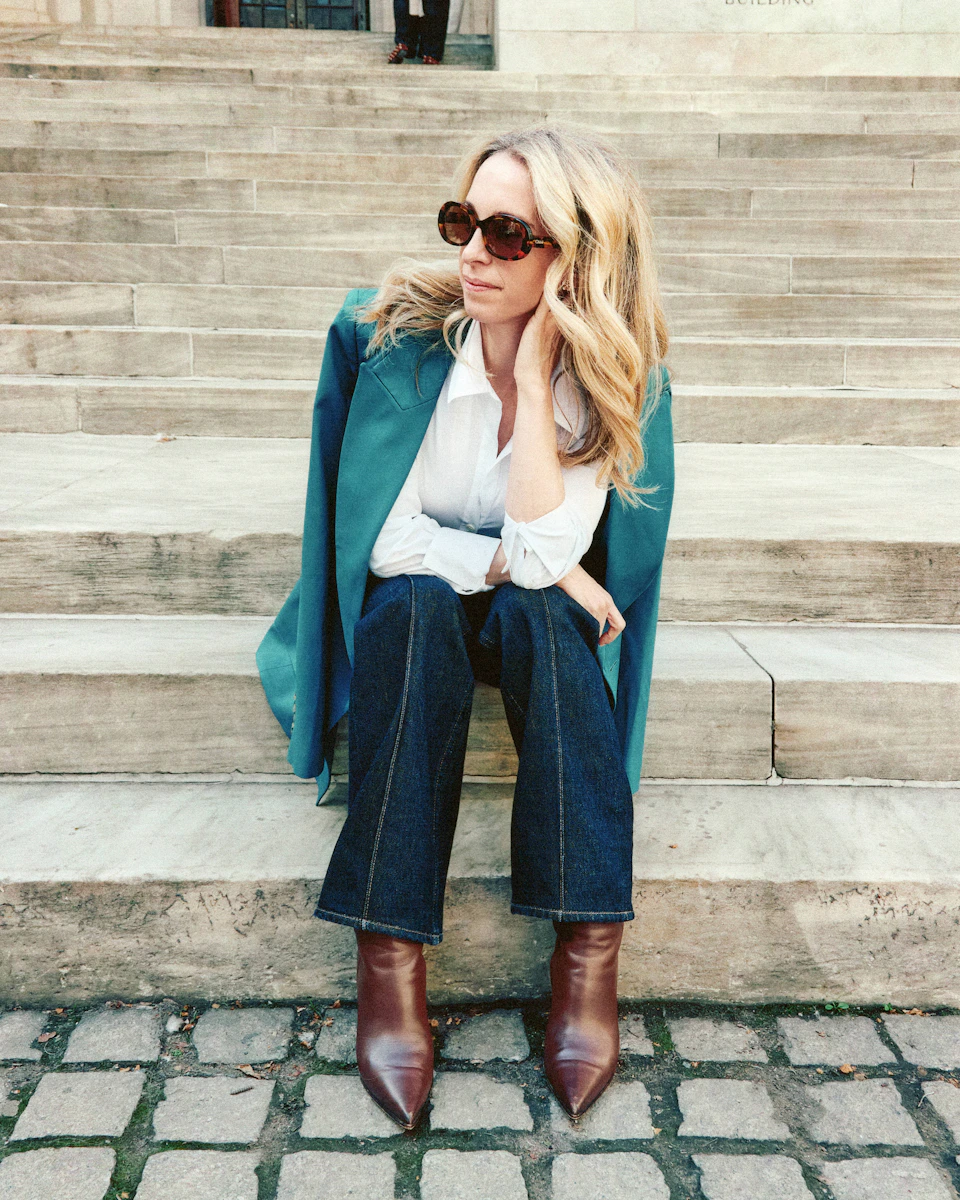
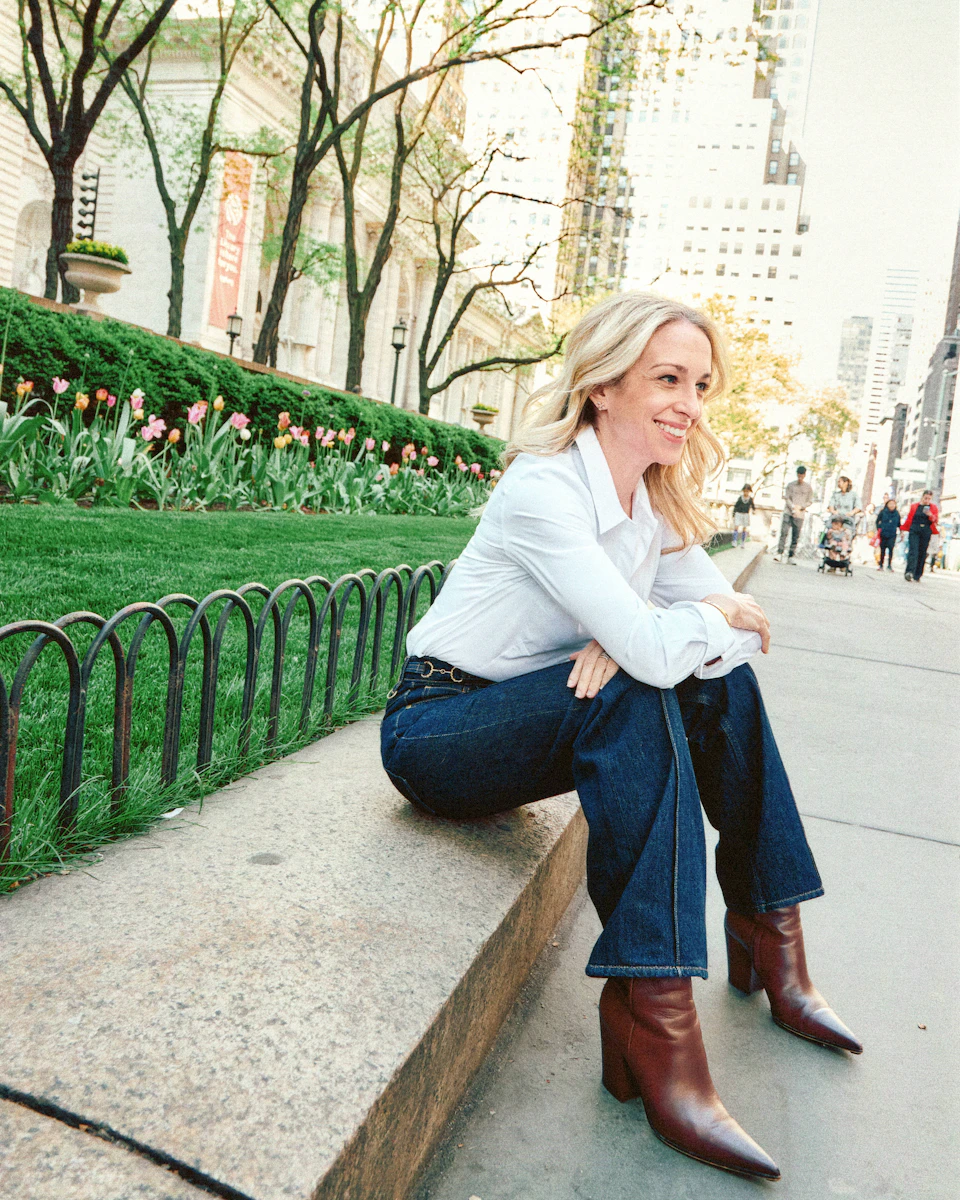
"When things are repetitive and monotonous and you hear a voice saying this is so boring, that's not a sign you're a bad parent."
Not Groundhog’s Day!
Before having a baby, there's stuff we should reflect on about ourselves. What's our relationship with uncertainty? How am I with things that are monotonous? For me, that wasn't the hardest part, but I have friends who are the life of the party. They are the person who says, "Becky, do you want to pick up and travel to this concert and get tickets?" Whereas I’m saying, "Oh my goodness, that's so last minute." But they love it. They love novelty, travel, and the new restaurant. Their baby is going to benefit so much.
But that person is going to find the monotony even harder than other parents because their baseline around novelty and new things is such a big part of their identity. And so they may be thinking: Am I literally living Groundhog's Day? If you are hearing this thinking “that is so me,” have compassion for yourself. When things are repetitive and monotonous and you hear a voice saying this is so boring, that's not a sign you're a bad parent. The story we tell ourselves about our feelings is what has an impact on our mental health.
Expanding Good Inside >>>
What gets me out of bed every morning, as well as everyone who works at Good Inside, is making sure parents have better, reliable, in-the-moment support. This means you're going to feel prouder of the way you show up or the spiral is going to be a little shorter. As we continued to connect with parents, we honestly kept hearing the exact same words from the majority of our members: I wish I had Good Inside from the start. Everything we do comes from our amazing community. After hearing that so many times, something happened inside me. That's actually where all this work began for me. I ran groups for pregnant people, for new parents for years.
I had one group that was supposed to go for a year, but it went on for six years. The power of learning and forming your identity as a new parent from the start, while in community with other people, I just think it's magic. I think it's something we all need. We wanted to make that available to so many more people. We wanted to finally have something for new parents that had everything in one place, that was consistent. We hear from parents all the time: My sleep consultant said this; but my lactation consultant said something completely contradictory . It's so overwhelming. We also wanted to make sure a parent knew they should be in the equation from day one, too. You can't take care of a baby without taking care of the person holding the baby.